
Epilepsy in Dogs: What Happens in the Brain and When Seizures Are Urgent
Medically reviewed · • Updated
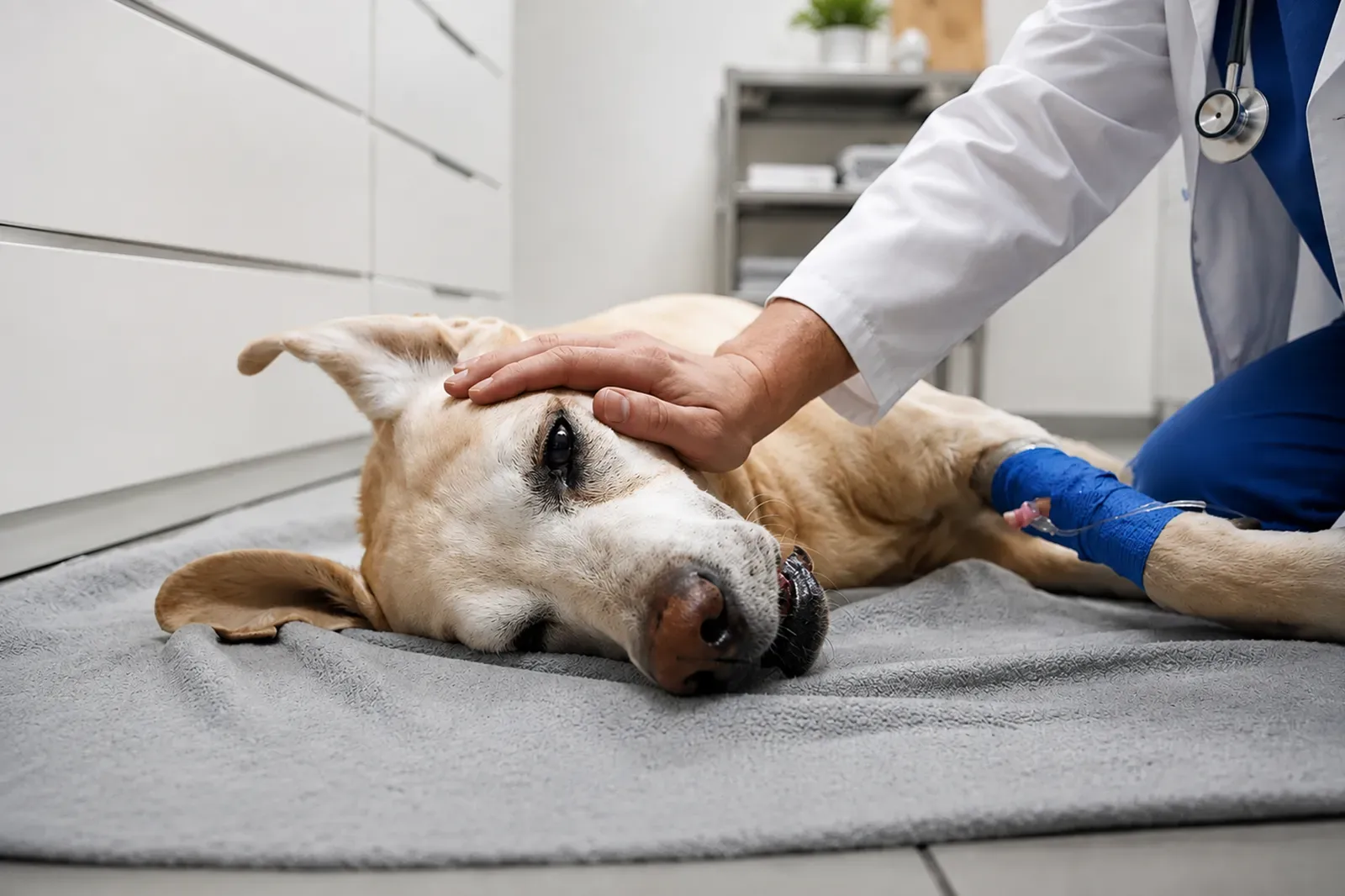
Parkview Pet Center, in Madinat Khalifa North, Doha, evaluates dogs that have had a seizure and helps distinguish idiopathic epilepsy from other causes of seizure activity. The clinic has provided veterinary care in Qatar since 2011, and offers an after-hours emergency on-call service for seizures that need attention outside normal opening hours.
What Happens in a Dog’s Brain During a Seizure
The brain keeps a careful balance between signals that activate nerve cells and signals that restrain them. A seizure is what happens when that balance breaks down.
During a seizure, neurons in the cerebral cortex begin firing excessively and in a highly synchronized pattern. The result can be dramatic whole-body convulsions, but abnormal electrical activity can also produce much subtler movements or behavioral changes that are easy to miss.
Several processes may contribute to epilepsy, and they can interact with each other over time:
Genetic susceptibility
Idiopathic epilepsy is thought to have a genetic or suspected genetic component in many dogs.
Ion channel and neurotransmitter changes
Changes in how easily neurons fire can make the brain more prone to abnormal electrical activity.
Network dysfunction
Groups of connected neurons can become abnormally synchronized, spreading excitation across the brain.
Neuroinflammation
Inflammatory processes within brain tissue may contribute to how seizures start and recur.
Blood-brain barrier changes
Changes in this protective barrier can affect how well the brain regulates its internal environment.
Not Every Seizure Has the Same Cause
When a dog has repeated seizure-like episodes, working out why is a central part of the veterinary assessment.
Using terminology associated with the International Veterinary Epilepsy Task Force, veterinarians distinguish between several categories of seizure disorder.
Idiopathic epilepsy
No identifiable structural brain disease is found. Genetics may play a role, and some cases are considered genetic or suspected genetic in origin.
Structural epilepsy
Disease within the brain itself is responsible for the seizures.
- Brain tumors
- Inflammatory disease
- Previous trauma
- Congenital or developmental abnormalities
Reactive seizures
Problems outside the brain temporarily disturb normal brain function.
- Low blood glucose
- Toxin exposure
- Liver disease
Why the distinction matters
The likely cause affects which investigations make sense, what treatment may help, and what a veterinarian can say about prognosis. It is not something an owner can determine by watching an episode at home.
What Does a Seizure Look Like in a Dog?
Many owners picture a dog collapsing with strong whole-body movements. That happens, but seizures can take other forms too.
Generalized seizures affect the whole body and are usually the most recognizable form:
Sudden collapse
The dog falls and cannot stay upright.
Loss of consciousness
The dog does not respond normally during the episode.
Body or limb rigidity
Muscles stiffen through the trunk or legs.
Paddling movements
The legs move as though running while the dog is down.
Excessive salivation
Drooling increases noticeably during the episode.
Jaw chomping
Repeated jaw movements occur involuntarily.
Vocalization
The dog may whine, bark, or cry out.
Urination or defecation
Loss of bladder or bowel control can occur during the episode.
Focal seizures affect a smaller area of the brain and can be far less obvious, sometimes resembling a behavioral quirk rather than a medical event:
Facial twitching
Small, repeated movements affect one side of the face.
Repeated blinking
The eyes blink rapidly and involuntarily.
Chewing or licking movements
The jaw or tongue moves repetitively without an obvious cause.
Fly-biting behavior
The dog snaps repeatedly at the air as though catching flies.
Head turning or limb jerking
The head turns to one side, or a single limb jerks repeatedly.
Sudden unusual behavior
A brief, out-of-character change in behavior appears and passes.
Because some episodes resemble movement disorders or behavioral events, a clear description helps. If it can be done safely, recording a video of the episode may help the veterinarian understand what happened.
The Three Phases of a Seizure
A seizure episode can include changes before, during, and after the obvious event.
Before: the pre-ictal phase
Some dogs show restlessness, anxiety, clinginess, or unusual attention-seeking behavior before a seizure begins.
During: the ictal phase
This is the seizure itself. Signs depend on which parts of the brain are involved and may include motor, behavioral, or autonomic changes.
After: the post-ictal phase
A dog may show confusion, unsteady walking, fatigue, increased hunger, or temporary difficulty seeing as seizure activity ends.
The recovery period is useful information for the veterinarian. It can help distinguish a seizure from other sudden episodic conditions that can look similar.
Why Repeated Seizures Should Be Investigated
A single seizure does not explain its own cause.
Without veterinary investigation, an underlying structural or extracranial problem may go unidentified. In dogs already diagnosed with epilepsy, a veterinarian also needs to know whether seizure frequency, clustering, or the overall pattern is changing.
Current thinking in veterinary neurology looks beyond the individual seizure. An assessment may consider:
How often seizures occur
Whether the pattern is changing
Whether several seizures occur close together
How completely the dog recovers
Whether there are neurological abnormalities between episodes
How the condition is affecting the dog’s quality of life
How seizure management is affecting the household
When Is a Seizure an Emergency?
Two Seizure Patterns Need Immediate Attention
Contact Parkview Pet Center’s after-hours emergency on-call service right away if either of these happens:
What Information Should You Bring to the Appointment?
A veterinarian often has to reconstruct the episode from what happened at home.
A video of the episode, if it can be recorded safely
What the dog was doing immediately beforehand
How the event started
Which parts of the body were affected
Whether consciousness appeared to be lost
Whether urination, defecation, salivation, or jaw movements occurred
How the dog behaved afterward
Whether similar episodes have happened before
Any possible exposure to toxins or unusual substances
Keeping a written record of repeated episodes can also help show whether a pattern is developing over time.
How Is Epilepsy Managed?
Management depends on why the seizures are happening, how often they occur, their pattern, and how they affect the individual dog.
The first goal is an accurate diagnosis, rather than assuming that every dog with a seizure has idiopathic epilepsy. Veterinary evaluation helps distinguish an epileptic disorder from structural brain disease, reactive seizures, or other conditions that can resemble seizures.
Diagnostic evaluation
An initial veterinary assessment looks for signs of structural disease or an extracranial cause before epilepsy is assumed.
Ongoing monitoring
Long-term management is tailored to the individual dog, with continued tracking of seizure frequency, recovery, and quality of life.
In-clinic assessment
Parkview Pet Center evaluates dogs with seizure episodes as part of the initial investigation and ongoing care.
When to See a Veterinarian
A dog should be assessed after a first unexplained seizure, even if the dog appears normal afterward.
Immediate attention is particularly important if a seizure lasts more than 5 minutes, several seizures occur close together, or the dog does not recover normally between episodes.
Prompt assessment is also worthwhile in these situations:
First known seizure
Any dog having its first seizure should be assessed by a veterinarian.
No full recovery between seizures
Another seizure begins before normal recovery has occurred.
Increasing frequency or severity
Seizures are becoming more frequent or more severe over time.
Marked disorientation
The dog remains markedly disoriented well after the episode.
Possible toxin exposure
There is a chance the dog encountered a toxic substance.
Other concerning signs
Additional signs appear before or after the seizure itself.
For non-urgent neurological assessment, visits with Parkview Pet Center’s veterinary care team can be arranged in advance.
If your dog has had a seizure, Parkview Pet Center can help determine why and plan the next step.
Clinical references
- International veterinary epilepsy task force consensus report on epilepsy definition, classification and terminology in companion animals . BMC Veterinary Research, 2015.
- International veterinary epilepsy task force consensus proposal: diagnostic approach to epilepsy in dogs . BMC Veterinary Research, 2015.
- ACVIM Consensus Statement on the management of status epilepticus and cluster seizures in dogs and cats . Journal of Veterinary Internal Medicine, 2024.
Share this article
Frequently Asked Questions
Answers to the most common questions
1 Does one seizure mean my dog has epilepsy?
No. A seizure can occur for several reasons. Veterinarians need to distinguish idiopathic epilepsy from structural brain disease, reactive seizures, and other conditions that can resemble seizures.
2 Should I record my dog’s seizure?
If it can be done safely, a video can be very useful. It allows the veterinarian to see movements and behaviors that may be difficult to describe afterward.
3 Why does my dog act confused after a seizure?
Disorientation, unsteadiness, fatigue, increased hunger, and temporary visual difficulty can occur during the post-ictal recovery phase.
4 When should I treat a seizure as an emergency?
A seizure lasting more than 5 minutes requires immediate veterinary attention. Several seizures occurring close together, particularly without full recovery, are also urgent.
5 Can dogs with epilepsy still have a good quality of life?
Epilepsy can often be managed with appropriate diagnosis, monitoring, and an individualized veterinary plan. The outlook depends on the underlying cause, seizure pattern, and the dog’s response over time.
Related Services
Other services you may need

Written by
Dr. Julieta CavalcanteDVM, Veterinarian • Dermatology, Dental Care & Stomatology, Neurology
Part of the veterinary team at Parkview Pet Center, Madinat Khalifa North, Doha, Qatar.
View full profileConcerned About Your Pet?
Book a consultation with our veterinary team in Doha.