
My Cat Has Diarrhea: What Could Be Causing It and When Should I Worry?
Medically reviewed · • Updated
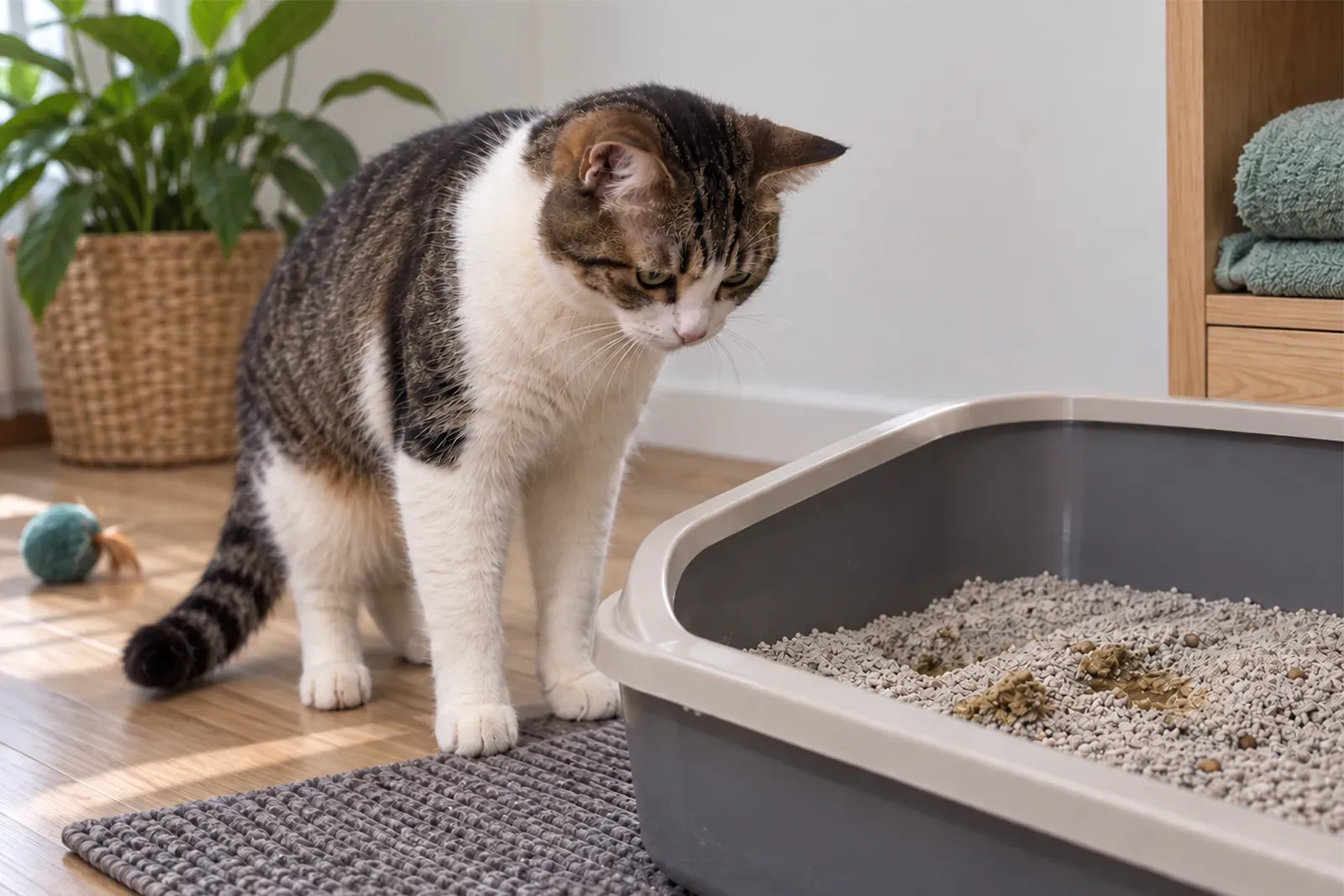
Diarrhea is one of the most common digestive complaints Parkview Pet Center sees in cats brought to its clinic in Madinat Khalifa North, Doha, Qatar. It can follow something as simple as a sudden food change, or it can point to intestinal parasites, infection, food-responsive intestinal disease, or a chronic digestive condition that needs proper investigation. A short episode in an otherwise bright, eating, drinking cat may settle on its own, but persistent or recurring diarrhea, blood in the stool, repeated vomiting, weight loss, or diarrhea in a kitten should not be left to run its course. Parkview Pet Center, established in 2011, assesses cats with diarrhea using a physical examination, on-site fecal testing, blood work, and digital X-ray or ultrasound when the history or examination point toward a problem that needs imaging.
When Cat Diarrhea Cannot Wait
A few presentations mean the diarrhea should not simply be watched at home, and warrant same-day veterinary attention.
Seek veterinary advice promptly if your cat has:
Any of the following alongside diarrhea means it is time to call, not wait:
Black, tarry stool is different from fresh red blood. It can mean digested blood from higher in the gastrointestinal tract, which is a more serious finding than blood that looks fresh and red. Continuing diarrhea also causes ongoing fluid and electrolyte loss on its own, and that loss accelerates sharply once vomiting starts alongside it, which is why the combination is treated as more urgent than either sign by itself.
What Does Diarrhea Look Like in Cats?
Diarrhea does not always mean completely liquid stool, and recognizing its different forms helps you describe the change accurately.
Soft or watery stool
stool that is looser than normal, from softly formed to fully liquid
More frequent litter trips
passing small amounts repeatedly rather than one normal-sized stool
Urgency or accidents
straining to reach the tray in time, or accidents just outside it
Mucus or a jelly-like coating
a slimy or gelatinous film on or around the stool
Fresh red blood
bright red streaks or spots in or on the stool
Straining to pass stool
visible effort, vocalizing, or repeated attempts in the tray
A pattern worth naming
Fresh red blood, mucus, straining, and frequent small amounts passed repeatedly often point toward irritation of the large intestine or colon, rather than the small intestine. Telling a veterinarian which of these you are seeing, rather than just ‘diarrhea’, helps narrow down where in the gut the problem sits.
What Could Be Causing My Cat’s Diarrhea?
Diarrhea is a symptom rather than a diagnosis. How suddenly it started, how long it has continued, and the cat’s age and history all help narrow down the cause.
Diet change or something eaten
A sudden switch to a new food, new treats, table scraps, dairy, another pet’s food, or something scavenged can unsettle a cat’s digestion within a day or two.
Intestinal worms or protozoa
Parasites such as roundworms and protozoa including Giardia are common in kittens, outdoor cats, and recently rescued cats, and can cause diarrhea with or without weight loss.
Food-responsive intestinal disease
Diarrhea that keeps returning, continues rather than resolving, or comes with vomiting or weight loss can respond to a carefully controlled diet trial rather than medication alone.
Stress or environmental change
Moving home, boarding, travel, a new pet, or visitors can trigger gastrointestinal signs in some cats, though persistent diarrhea should never be assumed to be behavioral alone.
Viral, bacterial, or parasitic infection
Infectious gastrointestinal disease can bring vomiting, reduced appetite, lethargy, fever, or weight loss alongside the diarrhea, and vaccination and exposure history help narrow the cause.
Chronic intestinal or systemic disease
Diarrhea that repeatedly returns or continues for an extended period is worked up differently from a single episode, ruling out parasites, diet, and other disease in turn.
These categories are not equally likely for every cat. A sudden episode in an adult cat with no diet change and no outdoor access points first toward something eaten or a passing upset, while the same signs in a recently rescued cat, or in a kitten, shift the priority toward parasites and infection. The Companion Animal Parasite Council specifically recommends parasite testing when a cat is showing clinical signs such as diarrhea, which is why an uncertain parasite history changes where the investigation starts rather than how it ends.
What Should I Check at Home?
What you notice before the appointment can meaningfully shorten the path to a diagnosis.
Note when the first abnormal stool appeared, and whether it is improving or getting worse
Check the stool for fresh blood, jelly-like mucus, or a black, tarry color before cleaning the tray
Watch whether your cat is eating, drinking, and moving normally, not only what is in the tray
Note whether vomiting is happening alongside the diarrhea
Take extra care and act sooner if your cat is a kitten
Think back over the last few days for any new food, treats, table food, milk, or scavenged food
Ask whether any other cat in the household has developed diarrhea around the same time
Why Rescue History Matters in Doha
Community-cat rescue and adoption are common in Qatar, and for a newly adopted cat this history can matter as much as the stool itself.
A recently rescued cat often arrives with an uncertain diet, an unknown parasite-control history, incomplete vaccination records, and previous exposure to other cats, any of which can explain diarrhea that has nothing to do with anything that happened after adoption. Because that background is missing rather than simply unclear, it changes which cause a veterinarian investigates first, rather than being an incidental detail.
Tell the veterinarian when and where the cat was found or adopted, and whether it previously lived outdoors.
Share whether previous deworming is known, since parasites are a leading consideration in cats with an uncertain history.
Mention whether vaccination records exist or are unknown, which helps guide how infectious causes are considered.
Note whether the diarrhea began before or after adoption, and whether other cats from the same environment are affected.
How Does a Veterinarian Find the Cause?
There is no single test that identifies the cause of every case of feline diarrhea. The history and physical examination decide which tests come next.
Physical examination and hydration assessment
The veterinarian checks general condition, hydration, weight, the abdomen, and temperature, and reviews the history to decide which tests, if any, make sense next.
Fecal testing
A fresh stool sample is examined on site for intestinal parasites and protozoa such as Giardia, particularly relevant for kittens, recently rescued cats, and cats with persistent or recurring diarrhea.
Blood testing
Blood work is used when diarrhea is persistent or recurrent, or when vomiting, weight loss, reduced appetite, or weakness are also present, to check for illness beyond the digestive tract.
Digital X-ray or ultrasound
Imaging is used when the examination or laboratory findings point toward an abdominal problem that needs a closer look.
Further internal medicine investigation
Diarrhea that keeps returning or continues for an extended period is worked up more thoroughly, supported by fecal testing, blood work, ultrasound, and X-ray, in a process that sits within gastrointestinal and internal medicine.
Persistent or unclear diarrhea is often worked up further with veterinary diagnostics at Parkview Pet Center, including on-site fecal testing, blood work, digital X-ray, and ultrasound.
How Is Diarrhea in Cats Treated?
There is no single treatment for every cat with diarrhea, because treatment follows the cause rather than the symptom.
Correcting fluid and electrolyte loss
Diarrhea, especially with vomiting, depletes fluid and electrolytes, and correcting this is often the first priority before the underlying cause is fully identified.
Treating an identified cause
A confirmed parasitic or infectious cause is treated specifically, rather than managed with a generic anti-diarrheal approach.
A structured dietary plan
When food-responsive intestinal disease is suspected, a carefully controlled diet trial is used to see whether the diarrhea resolves.
Managing a chronic condition
When an underlying chronic or systemic disease is identified, ongoing management addresses that condition directly, rather than just the stool.
Do not guess with medication
Do not give a cat human anti-diarrhea medication, or medication left over from another pet, unless a veterinarian has specifically advised it. The goal is not simply firmer stool; it is finding out why the diarrhea is happening and treating that cause directly.
Does Qatar’s Climate Matter?
Qatar’s heat is not usually the underlying cause of a cat’s diarrhea.
Heat becomes relevant mainly once a cat is already losing significant fluid through diarrhea, particularly if vomiting or reduced drinking is also happening, because dehydration progresses faster in hot conditions. For most cats in Doha, a recent rescue background, outdoor exposure, and an uncertain parasite, vaccination, or diet history are the more useful local considerations when working out what is going on.
When Should I Take My Cat to a Veterinarian?
Outside of an emergency, several patterns still call for an appointment rather than more time at home.
Arrange a consultation if your cat:
- Has diarrhea that continues rather than settling, or that keeps returning
- Has blood or significant mucus in the stool
- Is losing weight or eating less than usual
- Is also vomiting
- Becomes unusually quiet, weak, or appears painful
- Is a kitten, or one of several cats in the household affected
- Is a recent rescue with an uncertain parasite or medical history
Call +974 4417 1560 to book a consultation at Parkview Pet Center in Doha.
If your cat’s diarrhea is persistent, recurring, or accompanied by vomiting, blood, reduced appetite, or a change in behavior, book a veterinary consultation at Parkview Pet Center in Madinat Khalifa North, Doha.
Share this article
Frequently Asked Questions
Answers to the most common questions
1 Can I wait and see if my cat’s diarrhea goes away?
A brief, mild episode in an otherwise bright, eating adult cat sometimes settles on its own, but keep a close eye on appetite, drinking, vomiting, behavior, and the stool. Persistent or recurring diarrhea, blood, vomiting, weakness, appetite loss, or diarrhea in a kitten should be assessed by a veterinarian rather than watched further.
2 Why is there mucus or jelly in my cat’s diarrhea?
Mucus, frequent small bowel movements, urgency, and straining often occur when the large intestine or colon is irritated. Fresh red blood can sometimes appear alongside the mucus in the same pattern.
3 Why is there blood in my cat’s diarrhea?
A small amount of fresh red blood can occur with irritation lower in the intestinal tract and is often less concerning on its own. Larger amounts of blood, or black, tarry stool, are more serious, because black stool can indicate bleeding higher in the gastrointestinal tract.
4 Can worms or parasites cause diarrhea in cats?
Yes. Intestinal parasites and protozoa such as Giardia can cause diarrhea, particularly in kittens, outdoor cats, recently rescued cats, and cats with an unknown parasite history. Fecal testing helps determine whether parasites are present and guides the right treatment.
5 Why does my cat keep getting diarrhea?
Recurring diarrhea can be linked to parasites, food-responsive intestinal disease, chronic enteropathy, infection, or another underlying medical condition. Repeated episodes are worth investigating properly rather than continually changing foods or trying different remedies at home.
Related Services
Other services you may need

Written by
Dr. Luis PenaDVM, Veterinary Surgeon • Soft Tissue Surgery, General Surgery, Gastrointestinal Medicine
Part of the veterinary team at Parkview Pet Center, Madinat Khalifa North, Doha, Qatar.
View full profileConcerned About Your Pet?
Book a consultation with our veterinary team in Doha.