
Why Is My Cat Scratching So Much? Causes, Signs, and When to See a Vet
Medically reviewed · • Updated
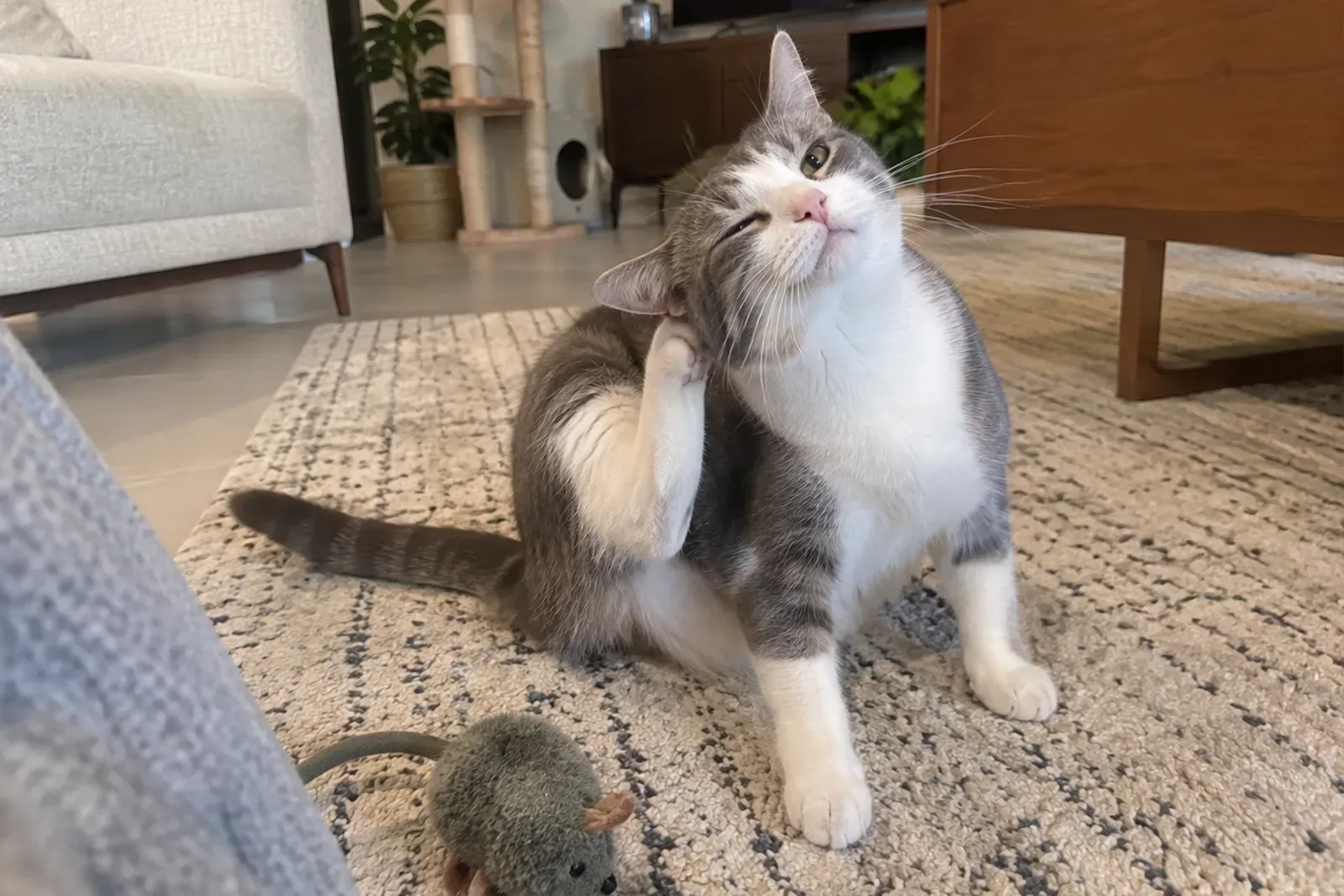
When a cat scratches, licks bald patches, or develops small scabs even though nothing seems obviously wrong, there is almost always an identifiable cause behind it. Parkview Pet Center, a veterinary clinic and hospital in Madinat Khalifa North, Doha, established in 2011, examines itchy cats regularly, and fleas and flea allergy are among the first possibilities ruled out, even in cats that never go outdoors. Food allergy, feline atopic skin syndrome, mites, ringworm, and stress-related overgrooming can all produce a similar pattern of licking, scratching, and hair loss, which is why appearance alone rarely settles the question. Qatar's warm climate removes the seasonal break that slows fleas down in colder countries, so parasite prevention has to run year-round. Parkview Pet Center's in-house laboratory allows skin sampling and microscopic testing during the same visit, so the cause can be identified rather than guessed at.
Signs of an Itchy Cat
Cats do not always make itching obvious, and sometimes the first sign an owner notices is that the coat or skin simply looks different.
Persistent licking
grooming that goes well beyond normal coat care, often focused on one spot
Bald patches
thinning or missing fur on the belly, inner thighs, or lower back
Crusty scabs
small scabbed lesions scattered across the back or neck
Face and ear scratching
repeated scratching or head shaking around the face, ears, or neck
Hair loss at the tail base
thinning fur where the tail meets the body, sometimes with reddened skin
Restlessness
a cat that cannot settle because the itching keeps interrupting rest
Cats groom themselves frequently, which is exactly why owners often see the result of scratching, a bald patch, a scab, a change in coat texture, well before they ever see the cat in the act. That gap matters, because it means a cat can be genuinely uncomfortable for some time before the problem looks urgent from the outside.
What Causes Constant Scratching in Cats?
Several distinct conditions produce very similar itching, scratching, and hair loss, which is why the cause is rarely obvious from a single look at the skin.
Fleas
One of the first causes to consider, even in a cat that never goes outdoors. Flea dirt is often easier to find than a live flea, and its absence does not rule fleas out.
Flea allergy
Some cats develop a hypersensitivity to flea saliva, so a small number of bites can trigger intense itching, scabbing, and hair loss well out of proportion to the exposure.
Food allergy
Usually affects the head, ears, face, and neck. A recent diet change is not required, since a cat can react to an ingredient it has eaten for years.
Environmental allergy
Feline atopic skin syndrome causes head and neck itching, crusted lesions, and overgrooming, and overlaps closely with flea and food allergy in appearance.
Mites
Ear mites and other skin mites cause itching, crusting, and hair loss, and often need microscopic examination to tell them apart from other skin disease.
Ringworm
A fungal infection that causes hair loss and scaling and can spread to other pets and to people, so it needs confirmed testing rather than a visual diagnosis.
These causes are not mutually exclusive, and they can overlap in the same cat. A flea-allergic cat can also have an environmental allergy, and a cat with ringworm can be scratching hard enough to cause a secondary skin infection on top of the fungal one. Because the visible pattern of licking, scabbing, and hair loss looks so similar across causes, working out which one, or which combination, is present usually needs an examination and, often, testing rather than a guess based on appearance.
Why Fleas Matter Year-Round in Qatar
Living indoors reduces some exposures, but it does not remove flea risk, and Qatar's climate changes the picture further.
Once fleas are introduced into a home, on a person's clothing, on another pet, or from a shared space, their immature stages can develop in bedding, carpets, and floor spaces without ever needing to be on the cat. That is why treating only the visibly itchy cat can fail to resolve a flea problem that has already established itself in the house. Countries with a prolonged cold winter get a seasonal break in the flea life cycle; Qatar's warm climate and climate-controlled indoor spaces do not provide that interruption, which is why flea prevention here works best as a year-round routine rather than something paused in cooler months.
An indoor cat is not a flea-proof cat
An indoor-only lifestyle lowers exposure, but it does not eliminate it, and a consistent, year-round parasite-prevention plan remains the most reliable protection regardless of how much time a cat spends outside.
Hair Loss, or Licking It Off?
Whether a cat is losing hair on its own or removing it through grooming gives the veterinarian a useful clue toward the underlying cause.
With self-induced hair loss, the cat repeatedly licks, bites, or chews at the coat, and the remaining hairs are often shortened or broken while the skin underneath can still look close to normal at first. With other skin diseases, the hair or skin itself is affected directly, and there may be scaling, crusting, redness, or moist, damaged patches even where the cat has not been obviously overgrooming. Two bald patches can look nearly identical to an owner while having very different causes behind them, which is why a description of how the area has changed over time is more useful to a veterinarian than appearance on a single day.
What to Check at Home
These observations help a veterinarian narrow down the cause. They are not meant to replace an examination.
Comb for flea dirt over the back and tail base, and check it on damp white tissue
Note where the itching is worst, whether the face, the back, the belly, or all over
Look closely at the skin for scabs, redness, moist patches, or broken hairs
Check whether other pets in the household are also scratching
Review whether flea prevention has been given consistently, with no gaps
Write down what your cat eats, including treats, table food, and supplements
Note whether the itching is constant or worse at certain times of year
Think about any recent change at home, such as a new pet, a move, boarding, or visitors
How Parkview Diagnoses the Cause
There is no single test that explains every itchy cat, so the approach is built around the individual cat's history and findings.
Skin and coat examination
The veterinarian looks at where the cat is itching and what pattern the lesions form, and checks whether hair has been licked away or has fallen out from skin disease.
Flea combing
The coat is combed for fleas and flea dirt, and parasite-prevention history is reviewed, since a current-looking flea program does not always mean it has been applied consistently.
Microscopic skin testing
Skin scrapings, tape samples, ear samples, or cytology can identify mites, yeast, bacteria, and inflammatory cells. Parkview Pet Center runs these in its in-house laboratory during the same visit.
Ringworm investigation
Appropriate fungal testing is used when the appearance, history, or household situation raises concern for ringworm, rather than treating on suspicion alone.
A controlled elimination diet
When food allergy remains possible, a structured elimination period followed by a dietary challenge is used to confirm it, an approach a random change of food at home cannot replace.
Persistent or recurring itching that does not settle is best assessed through veterinary dermatology rather than repeated home treatment.
How Constant Itching in Cats Is Treated
Treatment follows the cause rather than the scratching itself, though several elements are often combined.
Control fleas and other parasites
A parasite-control plan suited to the individual cat, extended to every animal in the household where fleas are already established.
Manage the allergy once identified
Once parasites and infection are ruled out, treatment can be directed at food allergy, environmental allergy, or both, guided by the elimination diet and examination findings.
Treat secondary skin damage
Repeated licking and scratching can break the skin and invite infection, so inflamed or infected areas are treated directly alongside the underlying cause.
Treat confirmed fungal or parasitic disease
Ringworm and mite infestations need specific treatment and household management, not general anti-itch care.
Never use a dog-only flea product on a cat
Some flea and tick products made for dogs are not safe for cats. Use only a product a veterinarian has specifically confirmed is safe for your cat.
When Scratching Can't Wait
Some scratching needs same-day care
Contact Parkview Pet Center promptly if your cat has:
Hair loss in the cat alongside new, circular, itchy skin patches in a person at home can happen with ringworm, which spreads between cats, other animals, and people. Because several skin conditions look alike, a suspected case should be tested rather than diagnosed by eye. Parkview's own guide to ringworm in dogs and cats covers the transmission and testing in more detail.
If your cat is scratching, losing hair, or developing scabs that keep coming back, book a dermatology consultation at Parkview Pet Center. Same-visit skin sampling and in-house testing help identify the cause rather than treating the itch alone.
Share this article
Frequently Asked Questions
Answers to the most common questions
1 Why is my cat scratching if I can't see any fleas?
Cats groom themselves so often that evidence of fleas is easy to remove before an owner sees it. Flea dirt, a review of parasite-prevention history, and a veterinary examination give more reliable clues than checking for live fleas alone. Flea allergy can also cause significant itching from a small number of bites, so limited exposure does not rule flea-related disease out.
2 Can an indoor cat get fleas in Qatar?
Yes. Fleas reach indoor cats through people, other pets, and shared spaces, and once inside a home their immature stages can develop in carpets and bedding without ever being on the cat. Qatar's warm climate does not interrupt this cycle the way a cold winter does elsewhere, so year-round prevention matters even for cats that never go outside.
3 Can my cat develop a food allergy without a recent diet change?
Yes. A cat can become allergic to an ingredient it has eaten safely for years, so a recent change in diet is not required for food allergy to appear. Confirming it needs a structured elimination diet followed by a dietary challenge, not simply switching foods at home.
4 Can ringworm from my cat spread to people?
Yes. Ringworm is a fungal infection that spreads between cats, other animals, and people through direct contact and contaminated bedding or surfaces. Because several skin conditions look similar, a suspected case should be confirmed with testing rather than diagnosed by appearance.
5 Can stress make my cat groom itself bald?
Stress can contribute to excessive grooming in some cats, but it should not be assumed to be the cause before fleas, allergies, mites, and fungal or other medical skin disease have been investigated. Those causes can produce a very similar pattern of hair loss.
Related Services
Other services you may need

Written by
Dr. Julieta CavalcanteDVM, Veterinarian • Dermatology, Dental Care & Stomatology, Neurology
Part of the veterinary team at Parkview Pet Center, Madinat Khalifa North, Doha, Qatar.
View full profileConcerned About Your Pet?
Book a consultation with our veterinary team in Doha.