
My Cat Is Sneezing With Runny Eyes: What Could Be Causing It?
Medically reviewed · • Updated
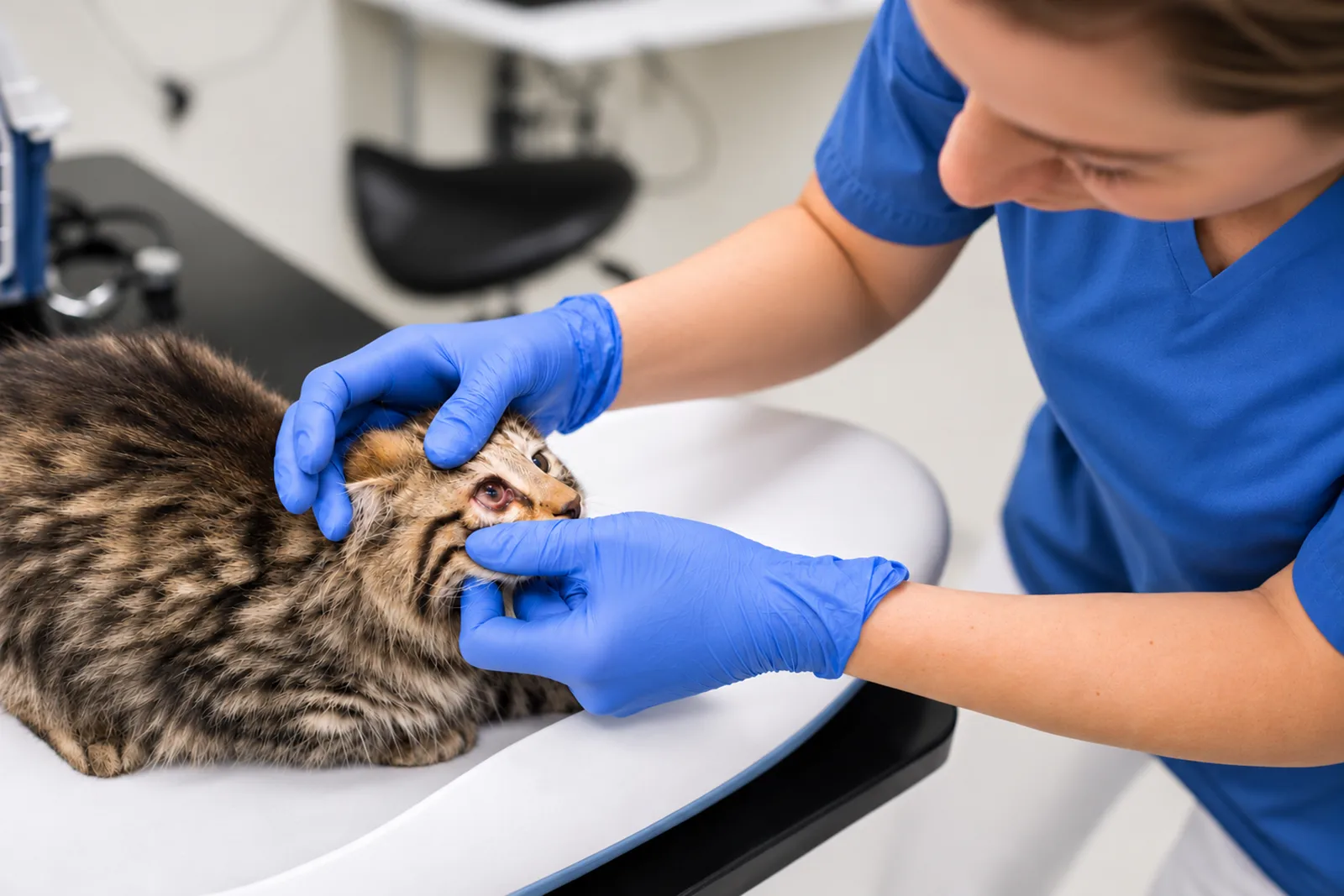
Parkview Pet Center in Madinat Khalifa North, Doha, Qatar treats cats with sneezing, watery eyes, and nasal discharge, most often caused by an upper respiratory infection commonly called cat flu, usually linked to feline herpesvirus or feline calicivirus, though bacterial infections, foreign material in the nose, dental disease, and nasal growths can look similar from the outside. Some cats stay bright and keep eating despite frequent sneezing, while others develop painful eyes, mouth ulcers, or stop eating entirely, which is a different and more urgent problem. Parkview Pet Center examines the nose, mouth, and eyes at every visit, and arranges further diagnostic testing when the cause of a cat’s symptoms needs confirming. The clinic, established in 2011, treats cats and dogs only.
What Are the Signs of Cat Flu?
Cat flu is a general term for infectious upper respiratory disease in cats, and it can affect the nose, throat, mouth, and eyes together. Not every cat develops every sign, and some stay bright despite sneezing often.
Frequent sneezing
Repeated, sometimes forceful sneezing is usually the first sign owners notice, often starting suddenly and continuing in bouts through the day.
Watery eye discharge
Clear, watery discharge from one or both eyes often goes along with conjunctivitis or the early stage of a viral infection.
Thick or colored discharge
Sticky yellow or green discharge from the eyes or nose can follow a secondary bacterial infection on top of the original virus.
Red or swollen eyes
Inflamed, red, or puffy eyelids point to conjunctivitis, and in more severe cases, inflammation of the surface of the eye itself.
Squinting or a closed eye
A cat holding one eye shut, or squinting against light, is in pain and may have a scratch or ulcer on the cornea.
Reduced appetite and activity
Nasal congestion makes it harder to smell food, and some cats eat less, sleep more, or stop eating altogether as they feel unwell.
Sneezing does not always mean cat flu
A cat with watery eyes and sneezing does not automatically have cat flu. Eye irritation, dental disease, and foreign material in the nose can look similar from the outside, which is why an examination still matters even when the pattern looks classic.
When Sneezing and Runny Eyes Cannot Wait
Most uncomplicated feline upper respiratory infections are manageable with veterinary guidance, but a few signs point to something more serious and need attention right away.
Seek emergency care immediately if your cat is:
Call the on-call line without delay if your cat is:
Arrange a same-day appointment if your cat is:
- A kitten that has stopped eating
- Holding one or both eyes closed, or squinting in pain
- Showing a cloudy eye or a visible change to the eye’s surface
- Unusually lethargic and refusing food or water
- Producing thick discharge alongside worsening illness
Call +974 4417 1560 to arrange a same-day examination at Parkview Pet Center.
Why Is My Cat Sneezing and Having Runny Eyes?
Several conditions can produce this combination of signs, and a cat’s age, vaccination history, recent exposure to other cats, and the pattern of discharge all help narrow down the possibilities.
Six causes account for most cases:
Feline herpesvirus (FHV-1)
One of two viruses behind most feline upper respiratory infections. It targets the eyes and upper airway, and after the first infection it can stay dormant in the body and reactivate later, often during a stressful event such as a house move or a new cat joining the household.
Feline calicivirus (FCV)
The other main viral cause. It produces sneezing, nasal discharge, and fever, and is particularly associated with mouth or tongue ulcers, drooling, and sometimes a temporary limp.
Secondary bacterial infection
Bacteria can take hold once a virus has already damaged the lining of the nose and eyes, thickening the discharge and prolonging illness, though the color of the mucus alone cannot confirm a bacterial cause.
Foreign material in the nose
A grass seed or other small object lodged in a nostril triggers sudden, forceful sneezing, usually from one side only, and sometimes a streak of blood.
Dental disease or tooth root infection
An infected upper tooth can occasionally produce one-sided nasal discharge, bad breath, and discomfort around the mouth, particularly in an older cat.
Nasal polyps or other growths
A polyp or growth inside the nasal passage can cause long-standing, noisy, or one-sided congestion that does not resolve the way an infection usually does.
Feline herpesvirus rarely leaves the body once a cat has been infected. The virus becomes latent in nerve tissue, and stress, such as a house move, a new cat arriving, boarding, or even a change in routine, can reactivate it weeks, months, or years later, producing a fresh episode of sneezing and eye inflammation in a cat that seemed to have recovered completely. This differs from calicivirus, which tends to cause a single acute illness with more prominent mouth ulcers, drooling, and occasionally a short-lived limp, without the same pattern of lifelong recurrence. Because the two viruses overlap heavily in their signs, symptoms alone rarely identify which one is responsible, and in most uncomplicated cases Parkview Pet Center does not need to know which virus is involved to treat the cat appropriately.
Foreign material, dental disease, and nasal growths behave differently from an infection, because they tend to produce one-sided symptoms that persist or worsen rather than settling over a week or two. An older cat with discharge from a single nostril and bad breath raises more suspicion of a tooth root problem than a virus, while a young cat with a long-standing, one-sided blockage and noisy breathing is more likely to have an inflammatory polyp. None of these patterns rules the others out completely, which is why persistent or one-sided signs are investigated with an examination and imaging rather than assumed to be ordinary cat flu.
Discharge color is not a diagnosis
Yellow or green discharge does not automatically mean a bacterial infection is present, and color alone cannot determine whether antibiotics are needed. A veterinarian weighs the whole clinical picture before recommending treatment.
What to Check Before Your Appointment
A few observations at home help a veterinarian narrow down the cause before the cat is even examined.
Discharge from both nostrils fits an infectious cause more often, while persistent discharge from a single nostril raises suspicion of a foreign body, dental problem, or localized nasal disease, though the pattern alone cannot confirm a diagnosis.
Cats rely heavily on smell when choosing food, so a congested nose makes meals less appealing, and painful mouth ulcers can make eating uncomfortable. A cat that stops eating altogether needs particular attention, especially a kitten.
Watery eyes can occur with ordinary conjunctivitis, but squinting, holding an eye closed, or rubbing at it suggests real discomfort and may mean a corneal injury or ulcer, a difference that changes how quickly the cat should be seen.
A cat from a shelter, a community colony, or a multi-cat household carries a higher chance of exposure to an infectious respiratory condition, especially if symptoms began shortly after joining the home.
Similar signs in more than one household cat make an infectious cause more likely, and affected cats should be kept apart from unaffected ones while advice is sought.
Vaccination against feline herpesvirus and calicivirus reduces the severity of illness, though it does not guarantee a vaccinated cat will never become infected. Knowing the vaccination date helps a veterinarian judge the risk.
How Parkview Pet Center Diagnoses Sneezing and Runny Eyes in Cats
The diagnostic approach depends on the cat’s symptoms, history, and physical examination, and not every cat needs every test.
Examination of the eyes, nose, and mouth
The veterinarian checks nasal airflow and discharge, eye redness and inflammation, mouth ulcers, dental health, breathing effort, hydration, and general condition, to judge whether the picture fits an uncomplicated respiratory infection or points somewhere else.
A closer look at a painful or cloudy eye
When an eye looks painful, red, cloudy, or is held shut, the veterinarian examines the corneal surface closely for a scratch or ulcer, because some eye medications are unsafe to use if an ulcer is present.
Further diagnostic testing when indicated
Not every sneezing cat needs additional testing, but when illness is severe, persistent, recurrent, or the diagnosis stays uncertain, Parkview Pet Center can arrange further diagnostics, including specific infectious disease testing when clinically appropriate.
Investigating persistent or one-sided discharge
When discharge mainly affects one nostril or does not improve as expected, further investigation can help identify a structural cause such as dental disease, foreign material, or a nasal growth.
Parkview Pet Center’s diagnostic services support further investigation when sneezing or eye discharge does not resolve as expected.
How Are Sneezing and Runny Eyes in Cats Treated?
Treatment depends on the underlying cause and how unwell the cat is, and supportive care is often the foundation of recovery from an uncomplicated viral infection.
Supportive care
Maintaining hydration, nutrition, and comfort is the foundation of recovery for most uncomplicated viral infections. Cats that are eating and drinking normally generally need less intensive treatment than cats that are weak, dehydrated, or refusing food.
Treatment for secondary bacterial infection
Antibiotics are prescribed when a bacterial infection is suspected or identified, but they do not treat the underlying herpesvirus or calicivirus, and should not be given automatically to every sneezing cat.
Treatment for eye complications
Eye treatment depends on whether the cat has conjunctivitis, corneal inflammation, an ulcer, or another problem, and may include veterinary-prescribed eye medication or antiviral treatment. A corneal ulcer needs specific treatment and monitoring to reduce the risk of complications.
Treatment for persistent or recurring disease
Some cats, particularly those carrying feline herpesvirus, develop repeated respiratory or eye flare-ups. Long-term management can include addressing recurrent eye disease, reducing avoidable stress, and investigating further when symptoms persist instead of repeating the same treatment each time.
When sneezing and nasal discharge come from a dental problem, a foreign body inside the nose, or a nasal polyp or other growth, these four approaches are not enough on their own. Treatment has to address the specific underlying cause, whether that means dental treatment, removing the foreign material, or investigating and managing a nasal growth, because masking the symptoms without treating the structural problem lets it keep damaging the tissue underneath.
What Can You Do at Home for a Sneezing Cat?
While arranging a veterinary visit, a few simple steps help keep an uncomfortable cat more comfortable without masking a problem that needs examination.
Gently wipe discharge from the fur around the eyes and nose with a clean, soft cloth dampened in warm water
Warm wet food slightly to make its smell more noticeable to a congested cat, checking it is not hot before offering it
Offer fresh water and check that your cat is drinking normally
Keep a quiet resting area away from unnecessary stress
Separate an affected cat from other cats and avoid sharing feeding bowls
Wash your hands after handling an unwell cat and clean anything the discharge has touched
Avoid these at home
- Human cold or flu medication
- Leftover antibiotics from a previous illness or another pet
- Eye drops intended for another pet, especially steroid-containing drops
Certain eye medications can worsen an undiagnosed corneal ulcer, so any eye treatment should start with a veterinary examination. Home care supports recovery, but it does not replace an examination when symptoms are painful, persistent, or worsening.
Cat Flu, New Arrivals, and Prevention in Qatar
Qatar’s active community-cat and rescue-adoption culture, and how common multi-cat households are, both affect how upper respiratory infections move between cats, and several practical steps reduce the risk.
Keep the newly adopted cat in a separate room at first
A single room with its own litter box, food, water, and bedding limits contact while any infection is still incubating or being diagnosed.
Monitor appetite, breathing, sneezing, and eye discharge
Daily observation over the first one to two weeks catches an emerging problem before it reaches the rest of the household.
Arrange a veterinary health examination
A check-up assesses general health, examines the eyes, nose, and mouth, and gives a baseline before the new cat meets resident cats.
Discuss vaccination history and preventive care
Because vaccination reduces the severity of feline herpesvirus and calicivirus but does not guarantee prevention, a veterinarian can advise on catching up or confirming existing protection.
Ask when it is appropriate to introduce the new cat
Timing depends on the examination findings and how the quarantine period goes, not on a fixed number of days.
Beyond a careful introduction, three ongoing habits matter:
Keep vaccinations up to date
Core feline vaccination protects against herpesvirus and calicivirus and reduces the severity of disease, even though a vaccinated cat can still become infected.
Reduce avoidable stress
A stable environment, predictable routines, and enough resources for every cat in the household can help limit herpesvirus flare-ups linked to stress.
Investigate recurring symptoms
Repeated sneezing or recurrent eye problems are worth investigating rather than treating the same way every time without finding out why they keep coming back.
Qatar’s sand and dust can also irritate a cat’s eyes and nose, and it is tempting to put ongoing sneezing down to dry, dusty air. But persistent sneezing together with significant eye discharge should not be attributed to dust by default, because infectious and other medical causes still need ruling out before the symptoms are dismissed as environmental.
When to See a Veterinarian
Early assessment identifies the cause, relieves discomfort, and reduces the risk of complications such as corneal damage or dehydration.
Arrange an examination if your cat has:
- Persistent or worsening sneezing
- Ongoing eye or nasal discharge
- Thick discharge together with reduced appetite or lethargy
- Repeated episodes of respiratory symptoms
- Discharge that consistently affects one nostril
- Difficulty eating or suspected mouth ulcers
A painful or closed eye should be examined the same day, a kitten that stops eating needs prompt attention, and open-mouth breathing, severe difficulty breathing, or collapse needs immediate care. Call +974 5509 9494 after hours, or +974 4417 1560 to book during clinic hours.
If your cat is sneezing repeatedly, has persistent eye discharge, or seems uncomfortable, book a veterinary consultation at Parkview Pet Center in Madinat Khalifa North, Doha.
Share this article
Frequently Asked Questions
Answers to the most common questions
1 Can cat flu spread to my other cats?
Yes. The viruses behind cat flu spread between cats through eye and nose secretions, close contact, and shared or contaminated objects. If one cat starts sneezing or has eye discharge, keep it separate from other cats and contact Parkview Pet Center for advice. Call +974 4417 1560 to book an examination.
2 My cat is vaccinated — can it still get cat flu?
Yes. Vaccination against feline herpesvirus and calicivirus does not completely prevent infection, but it does reduce the severity of illness, which is why it remains an important part of preventive care. If a vaccinated cat develops signs, it should still be examined.
3 Can I clean my cat’s runny eyes at home?
You can gently wipe discharge from the fur around the eyes with a soft, clean cloth dampened in warm water, avoiding the eye itself and any human eye medication. If the eye is red, painful, cloudy, or held closed, your cat needs prompt veterinary examination rather than ongoing home care.
4 Why is my cat sneezing from only one nostril?
Sneezing and discharge mainly affecting one nostril can happen with infection, but it also raises suspicion of a foreign body, dental disease, or a nasal growth. Persistent one-sided symptoms, especially if the discharge becomes bloody or does not improve, deserve a veterinary examination to look for a structural cause.
5 Can cat flu come back after treatment?
Yes, particularly with feline herpesvirus, which can remain in the body long-term and reactivate during stressful periods, producing a new episode of sneezing or eye inflammation. Recurring signs should not automatically be assumed to be herpesvirus, though — a veterinarian may need to investigate other causes if episodes keep happening.
Related Services
Other services you may need

Written by
Dr. Luis PenaDVM, Veterinary Surgeon • Soft Tissue Surgery, General Surgery, Gastrointestinal Medicine
Part of the veterinary team at Parkview Pet Center, Madinat Khalifa North, Doha, Qatar.
View full profileConcerned About Your Pet?
Book a consultation with our veterinary team in Doha.