
My Cat Keeps Going to the Litter Tray but Nothing Comes Out: Is It an Emergency?
Medically reviewed · • Updated
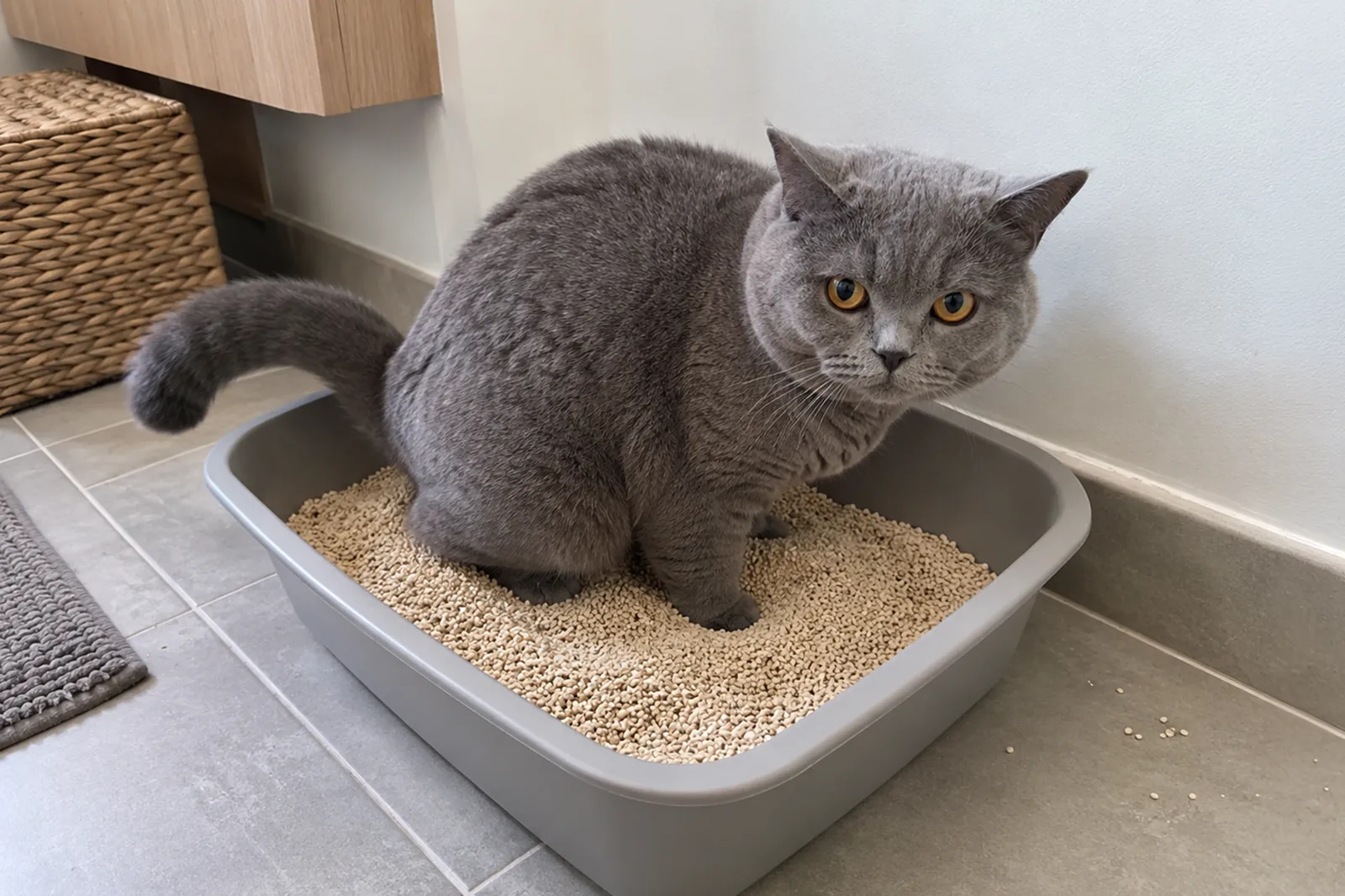
Parkview Pet Center in Madinat Khalifa North, Doha, Qatar sees cats that keep going to the litter tray while producing little or no urine, a presentation that can signal feline idiopathic cystitis, bladder stones, a urinary tract infection, or urethral obstruction. The question that matters first is simple: is urine actually leaving the bladder? Urinary obstruction is more common in male cats because of their narrower urethra, but female cats can also become blocked, and in either sex a complete blockage is a life-threatening emergency. Parkview Pet Center, established in 2011, assesses cats with urinary signs through physical examination, urine testing, and blood work, with imaging such as X-ray or ultrasound considered when the findings point that way. If you cannot confirm that your cat is passing urine despite repeated straining, seek immediate veterinary attention. Urinary obstruction is more common in male cats, but female cats can also become blocked. Do not wait for other symptoms to appear.
Why Does My Cat Keep Going to the Litter Tray?
Repeated trips to the litter tray are a sign, not a diagnosis — several different problems can look almost identical from the outside.
Repeated trips to the tray
Visiting the litter tray again and again, often producing little or nothing each time.
Straining or crying
Prolonged squatting, straining, or vocalizing while trying to urinate.
Little or no urine
Only tiny drops, unusually small clumps, or no visible urine at all.
Blood in the urine
Pink- or red-tinged urine, or blood visible in the litter.
Urinating outside the tray
Passing urine on floors, bedding, or other surfaces away from the litter tray.
Repeated genital licking
Licking at the genital area more than usual, often alongside restlessness.
Feline idiopathic cystitis, bladder stones, a urinary tract infection, and urethral obstruction can all produce strikingly similar signs, which is why watching your cat from across the room rarely settles the question. What matters is not just that your cat is straining, but whether urine is actually leaving the body — because that single detail changes whether this is something to monitor or something to treat as an emergency.
First Check: Is Any Urine Actually Coming Out?
Squatting in the litter tray is not the same thing as urinating. Look at what your cat is actually producing, not just how long they are in the tray.
Are there normal-sized clumps, or only tiny drops and unusually small clumps?
Is there any visible urine at all, or does the tray look untouched?
Is there blood visible in the litter or on the clumps?
Is the cat crying out or vocalizing while straining?
Is the cat male or female? Male cats are far more likely to develop a complete blockage.
Has the cat started vomiting, stopped eating, or become unusually quiet or withdrawn?
In a multi-cat household, working out which cat produced a particular clump can be difficult, so separating cats temporarily or photographing an unusual clump or any blood can give the veterinarian useful information. If your cat is repeatedly straining and you cannot confirm that urine is being passed, treat that as reason enough to seek urgent veterinary assessment rather than waiting to see if other symptoms appear — this applies whether the cat is male or female, though male cats face a higher risk of a complete blockage.
From Dr. Julieta Cavalcante
Owners often think their cat is constipated when they’re actually struggling to urinate. If little or no urine is coming out, don’t wait — this can be an emergency.
Why Is a Urinary Blockage an Emergency in Cats?
Urinary obstruction can affect both male and female cats, although it is more common in males because of their narrower urethra.
Obstruction can occur when material such as urethral plugs or urinary stones blocks urine flow. When urine cannot leave the bladder, pressure builds within the urinary tract. Kidney function can be affected, and dangerous electrolyte abnormalities can develop. Without prompt veterinary treatment, urinary obstruction can become life-threatening in both male and female cats.
Early signs can include:
Repeated unsuccessful attempts
The cat keeps returning to the litter tray without producing a normal amount of urine.
Straining
Visible effort, prolonged squatting, or clear discomfort while trying to urinate.
Crying or vocalizing
Vocal distress during attempts to urinate, which owners often mistake for constipation.
No urine produced
Repeated trips to the tray with no urine, or only a few drops, left behind.
As obstruction progresses, a cat may develop:
Loss of appetite
A cat that stops eating alongside urinary straining should be assessed without delay.
Vomiting
Vomiting on top of straining is a sign the condition is affecting the whole body, not just the bladder.
Severe lethargy or weakness
A cat that becomes unusually quiet, weak, or reluctant to move needs urgent attention.
Painful or enlarged abdomen
A tense, swollen, or painful abdomen can mean the bladder is full and unable to empty.
Collapse
Collapse is a late sign of a urinary emergency and needs immediate veterinary care.
Do not wait. Do not wait for vomiting, weakness, or collapse before seeking veterinary help — those are late signs, not the first ones.
What Else Can Cause These Signs?
A straining cat does not always have an infection, and treating every case the same way misses what is actually happening.
Several conditions can produce overlapping signs:
Feline idiopathic cystitis
A complex bladder condition involving inflammation, the cat’s stress-response system, and its environment, not simply an infection.
Bladder stones or urethral plugs
Mineral stones or plug material can irritate the urinary tract and, in male cats, physically block the flow of urine.
Urinary tract infection
Bacterial infection is a less common cause in healthy adult cats, but becomes more relevant in older cats and those with other health conditions.
Pain or difficulty using the tray
Arthritis and other mobility problems can make it uncomfortable for an older cat to posture normally in a high-sided litter tray.
Feline idiopathic cystitis, usually shortened to FIC, is an important cause of lower urinary tract signs in cats, and it should not simply be described as a bladder infection. The cat’s stress-response system and environment can contribute to episodes in susceptible cats, which is why changes such as moving house, visitors, renovation or building work, a new pet or family member, conflict between cats, a moved litter tray, altered feeding routines, or reduced access to hiding and resting places are worth mentioning to the veterinarian. That does not mean the pain or the other signs are imaginary, and recurrent urinary signs should never simply be labeled as stress without considering stones, infection, obstruction, and other causes.
Bladder stones and urethral plugs can irritate the urinary tract and cause discomfort, blood in the urine, frequent urination, and straining, and in male cats they can physically interfere with the flow of urine. Finding crystals in a urine sample does not by itself establish the cause, because stones can be present without matching crystals, and crystals can sometimes be found without being responsible for the current signs — which is why urinalysis and imaging are used together rather than either test standing alone.
It is common for owners to assume that straining means an infection, but bacterial urinary tract infection is relatively uncommon in otherwise healthy adult cats, and becomes more relevant in some older cats and cats with underlying medical conditions. That means urinary signs should not automatically lead to antibiotic treatment — urine testing, and bacterial culture when appropriate, help confirm whether an infection is genuinely present before treating for one.
Arthritis and other mobility problems can make it uncomfortable for an older cat to climb into a high-sided litter tray or hold a normal posture while urinating, which can look very much like straining. Even so, repeated straining with little or no urine should not simply be put down to arthritis, particularly in a male cat, until a urinary obstruction has been ruled out.
How Does Parkview Pet Center Find the Cause?
The first priority is working out whether the cat is obstructed, because that changes everything that happens next.
Physical examination
The veterinarian assesses the cat’s general condition and carefully examines the abdomen and bladder, which helps determine whether emergency treatment is needed straight away.
Urinalysis
Urine testing can assess concentration, blood, inflammatory changes, crystals, and bacteria, giving an early picture of what is affecting the bladder and urethra.
Blood testing
An obstructed or systemically unwell cat may need blood testing to check kidney function, electrolytes, and other changes caused by impaired urine flow.
Imaging when indicated
X-ray or ultrasound imaging may be recommended depending on the examination and laboratory findings, to look for stones, bladder abnormalities, or other urinary tract changes.
Parkview Pet Center's diagnostics service supports the urine testing, blood work, and imaging used to investigate urinary signs in cats.
How Are Urinary Problems in Cats Treated?
Treatment depends on the underlying cause, and an obstructed cat is treated differently from a cat with uncomplicated cystitis.
If the cat is obstructed
Treatment focuses first on stabilizing the cat and restoring urine flow before anything else is addressed.
- Assessment and stabilization
- Pain management and supportive care
- Restoring urine flow, including catheterization when indicated
- Fluid therapy and monitoring of urine output and blood values
- Investigating the underlying cause and the risk of recurrence
If it is feline idiopathic cystitis
Management is individualized, and current feline guidelines favor a broader, multimodal approach over a single intervention.
- Appropriate pain management
- Encouraging water intake
- Dietary management where appropriate
- Suitable litter-tray access and placement
- Reducing relevant environmental stressors, including tension between cats in multi-cat households
If stones are present
Management depends on the stone’s type, size, and location, and on whether an obstruction is present. Some stones can be managed nutritionally; others need physical removal.
If infection is confirmed
Treatment follows evidence of a genuine bacterial infection from urine testing. Not every cat with urinary signs has an infection, and not every episode needs antibiotics.
A multimodal approach
Because feline idiopathic cystitis is multifactorial, current feline guidelines recommend combining several of these measures rather than relying on any single one, and a plan that only changes the diet or only treats pain is less likely to prevent the next episode.
Cats with recurrent or more complex urinary problems may need further investigation and an individualized long-term plan, which is best arranged through a veterinary consultation rather than repeated short-term treatment.
How Can I Help My Cat Drink More?
Encouraging water intake can help manage several feline urinary conditions, though the right approach depends on the individual cat and diagnosis.
Offer several fresh-water locations around the home
Try a cat drinking fountain
Keep water bowls away from litter trays
Separate food and water bowls if your cat prefers that
Clean bowls regularly
Try wide, shallow bowls
Include wet food when clinically appropriate
Make sure every cat in a multi-cat home has its own water, food, and litter tray
For a cat living indoors in Doha, where windows often stay closed against the heat, the practical goal is to make fresh water easy for the cat to reach and easy for you to keep track of.
When Should I See a Veterinarian?
The important question is not simply whether some urine is coming out, but whether your cat is urinating normally and comfortably.
Seek Veterinary Attention Immediately
Seek immediate veterinary attention if:
Clinic hours
Parkview Pet Center is open 8:00 AM to 10:00 PM, seven days a week. Outside those hours, an after-hours emergency on-call service is available for urgent problems such as a cat that cannot pass urine.
Arrange a prompt veterinary assessment if your cat has:
- Blood in the urine
- Repeated litter-tray visits without a clear result
- Crying or vocalizing while urinating
- Recurrent urinary episodes
- New urination outside the litter tray
- Persistent genital licking
- New urinary signs in an older cat
Squatting is not the same as urinating. A cat that is still passing urine but showing any of these signs still benefits from a veterinary assessment to find the underlying cause, rather than waiting to see whether it resolves on its own.
For a cat that is still passing urine but showing abnormal urinary signs, Parkview Pet Center's veterinary consultations can help establish the cause.
If your cat is straining in the litter tray, producing little or no urine, or showing any of these signs, book a veterinary consultation at Parkview Pet Center. A cat that cannot pass urine needs immediate attention, whether male or female, not a wait-and-see approach.
Share this article
Frequently Asked Questions
Answers to the most common questions
1 My cat keeps trying to pee but nothing comes out. Can I wait until morning?
No. A cat that repeatedly strains without producing urine may have a urethral obstruction, which is a life-threatening emergency — this is more common in male cats because of their narrower urethra, but it can affect females too. This needs immediate veterinary assessment rather than overnight monitoring, so call the emergency line at +974 5509 9494 without delay.
2 How can I tell whether my cat is trying to urinate or trying to defecate?
Urinary problems and constipation can both cause a cat to squat and strain repeatedly, which makes them hard to tell apart just by watching. Look for fresh urine clumps, unusually small amounts of urine, visible blood, and genital licking. If your cat strains repeatedly and you cannot confirm urine is being produced, treat it as a possible urinary emergency rather than assuming constipation, regardless of whether the cat is male or female.
3 Can stress really cause bladder problems in cats?
Yes, it can contribute. Feline idiopathic cystitis is linked to changes in a cat’s stress-response system, and environmental stressors can trigger episodes in susceptible cats. However, not every urinary problem is caused by stress — stones, infection, and urethral obstruction can produce similar signs and often need testing to tell them apart.
4 Does blood in my cat's urine mean a urinary infection?
Not necessarily. Blood in the urine can occur with feline idiopathic cystitis, bladder stones, urethral disease, infection, and other urinary conditions. Because bacterial infection is not the cause of every urinary episode in cats, urine testing is needed before assuming an infection is responsible.
5 How can I reduce the chance of my cat's urinary problem coming back?
Prevention depends on the underlying diagnosis. Depending on the cause, a veterinarian may recommend encouraging water intake, improving litter-tray access, adjusting the home environment, maintaining a healthy body weight, and following specific dietary advice. Cats that have had a urethral obstruction or recurrent urinary signs need an individualized long-term plan.
6 Is a urinary tract infection a common cause of straining in cats?
It is less common than many owners expect. Bacterial urinary infection is relatively uncommon in otherwise healthy adult cats, and becomes more relevant in older cats or those with other medical conditions. This is why urinary signs should not automatically lead to antibiotic treatment without testing.
Related Services
Other services you may need

Written by
Dr. Julieta CavalcanteDVM, Veterinarian • Dermatology, Dental Care & Stomatology, Neurology
Part of the veterinary team at Parkview Pet Center, Madinat Khalifa North, Doha, Qatar.
View full profileConcerned About Your Pet?
Book a consultation with our veterinary team in Doha.