
Dog Ear Infection Troubles? My Step-by-Step Fix
Medically reviewed• Updated
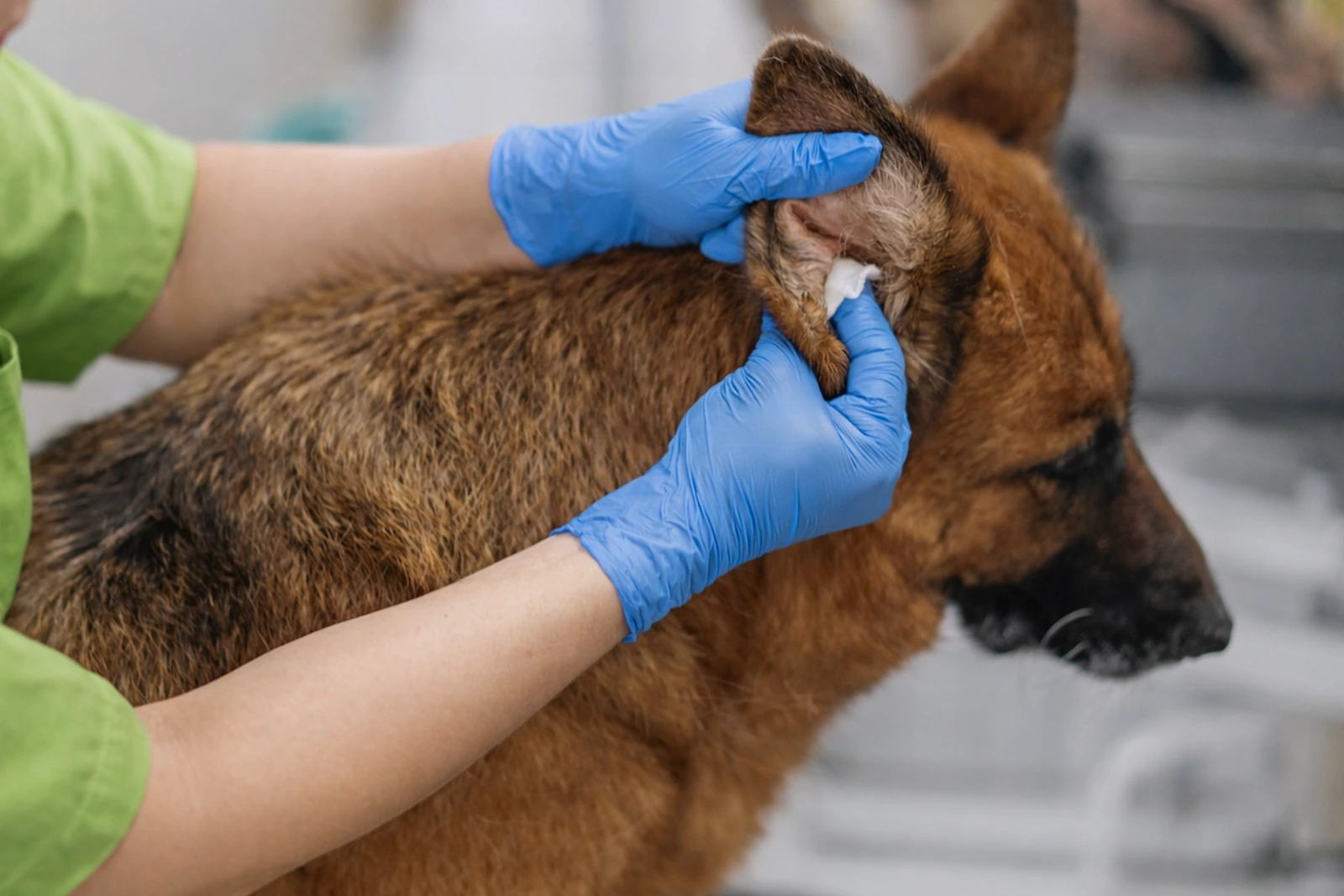
Dog ear infections are one of the most common presentations at Parkview Pet Center in Madinat Khalifa North, Doha, Qatar. In my 19+ years of veterinary practice — across Brazil, the United States, and Qatar — I’ve gained extensive experience treating ear infections across three countries, and Doha’s climate makes them more prevalent than almost anywhere else I’ve worked. The year-round heat and humidity, combined with sand and dust exposure and the constant cycling between air-conditioned indoors and hot outdoors, creates an environment where ear infections thrive. If your dog is scratching at their ears, shaking their head, or you’ve noticed an unusual smell, here’s what I want you to know.
Why Ear Infections Are So Common in Doha
Qatar’s climate is essentially a perfect storm for ear infections in dogs.
Humidity traps moisture
Even dogs that don’t swim can accumulate moisture in their ears from Qatar’s humid air. The ear canal is a warm, dark, enclosed space — add moisture, and you have ideal conditions for bacteria and yeast to multiply.
Sand and dust irritants
Fine particulates from sandstorms and environmental dust enter the ear canal and cause irritation. This prompts the ear to produce more wax, which traps more debris, creating a cycle that can lead to infection.
Air conditioning cycling
Dogs in Doha move constantly between extreme outdoor heat and cool indoor air conditioning. These temperature and humidity changes affect the ear canal environment and contribute to wax production and moisture imbalance.
Breed predisposition
Many breeds popular in Qatar’s expat community are especially prone to ear infections. If you own one of these breeds in Doha, regular ear checks should be part of your routine.
At-risk breeds popular in Qatar:
Signs Your Dog Has an Ear Infection
If you notice two or more of these signs together, it’s time to book a veterinary consultation.
Persistent scratching
at one or both ears, often with the hind leg
Head shaking
more frequent or vigorous than normal
Odour
a yeasty, musty, or foul smell from the ears
Discharge
brown, yellow, or dark crumbly material in the ear canal
Redness and swelling
inside the ear flap
Pain when touched
pulling away, whimpering, or becoming aggressive when you handle the ears
Urgent — seek immediate attention
If your dog shows sudden onset of severe head tilt, loss of balance, or circling, these could indicate a middle or inner ear infection. Call +974 4417 1560 immediately.
My Step-by-Step Diagnostic Approach
When you bring your dog to me with a suspected ear infection, here’s exactly what happens during the consultation:
Clinical history
I ask about the duration of symptoms, whether this is a first occurrence or recurrent, any recent swimming or bathing, current medications, and diet. Recurrent ear infections often point to an underlying allergy — this is important to identify early.
Otoscopic examination
I examine the ear canal with an otoscope — a lighted magnifying instrument that allows me to see deep into the canal. I’m looking for redness, swelling, discharge type, foreign bodies, and the condition of the eardrum (tympanic membrane). If the eardrum is ruptured, it changes the treatment approach significantly.
Ear cytology
This is the most important diagnostic step, and it’s why treating at a veterinary clinic with in-house diagnostics matters. I take a swab of the ear discharge and examine it under the microscope — right here in our lab, during the same visit. Cytology tells me whether the infection is bacterial, yeast, or mite-related, and whether there’s a mixed infection. This determines which medication will actually work. Prescribing ear drops without knowing the infection type is guesswork — and guesswork often fails.
Culture and sensitivity
For severe or recurrent infections that haven’t responded to treatment, I send a sample to the laboratory for bacterial culture and antibiotic sensitivity testing. This identifies the exact bacterial species and which antibiotics it responds to — critical for resistant infections.
Treatment Options
Treatment depends entirely on what the cytology reveals:
Bacterial infections
Topical antibiotic ear drops, often combined with an anti-inflammatory to reduce swelling and pain. For severe infections, oral antibiotics may be added. The treatment course typically runs 7–14 days, with a follow-up to confirm resolution.
Yeast infections
Antifungal ear drops, often combined with a steroid to reduce inflammation. Yeast infections are common in dogs with allergies and in Qatar’s humid environment. They tend to recur if the underlying cause isn’t addressed.
Ear mites
Anti-parasitic medication — topical or systemic. All dogs in the household should be treated simultaneously, as mites are highly contagious through direct contact.
Ear cleaning protocols
Using a veterinary-approved ear cleaner (not water, not hydrogen peroxide, not olive oil), you flood the canal, massage the base of the ear, and let the dog shake. I demonstrate proper technique during the consultation and provide a cleaning schedule.
Follow-up is essential
I schedule a follow-up at 10–14 days to re-examine and repeat cytology. This confirms the infection has cleared. Stopping treatment too early — because the symptoms improved — is the most common reason infections return. You can book your follow-up online or call +974 4417 1560.
Preventing Ear Infections in Qatar
Prevention is always better than treatment. In Qatar’s climate, these steps make a real difference:
Dry ears after every bath or swim
Use a clean, dry cloth or cotton ball to gently dry the outer ear canal. Never insert cotton buds deep into the canal.
Regular cleaning schedule
For most dogs in Doha, every 1–2 weeks with a veterinary-approved cleaner. More frequent for floppy-eared breeds.
Keep ear hair managed
Breeds with hairy ear canals (Poodles, Shih Tzus) benefit from regular ear hair removal during grooming appointments.
Learn moreAddress allergies
If your dog has recurrent ear infections (3+ per year), the underlying cause is almost certainly allergies — environmental or food. A dermatology consultation and allergy workup can identify triggers and reduce infection frequency dramatically.
Learn moreAvoid over-cleaning
Too-frequent cleaning can strip the ear’s natural protective oils and actually increase infection risk. Follow the schedule your vet recommends — not more.
When It’s More Than a Simple Infection
About 30% of dogs I see for ear infections have an underlying condition driving the problem. The ear infection is a symptom, not the root cause.
Allergic dermatitis
The most common underlying factor. Dogs with atopic dermatitis (environmental allergies) or food allergies develop chronic ear inflammation that predisposes them to repeated infections. If your dog’s ear infections keep coming back despite proper treatment, I recommend a full dermatology workup to investigate allergies.
Dermatology servicesHormonal conditions
Hypothyroidism and Cushing’s disease can alter the ear canal environment and increase susceptibility. Blood work through our internal medicine team can identify these.
Internal medicineAnatomical factors
Some dogs have abnormally narrow ear canals or excessive tissue growth that requires ongoing management. Severe chronic cases may eventually need surgical intervention (total ear canal ablation), but this is a last resort after all medical options are exhausted.
Book a consultationThe bottom line: a single ear infection is usually straightforward to treat. But if infections recur, your dog deserves a thorough investigation into why — not just another round of ear drops.
For comprehensive ear infection diagnosis and treatment at our clinic, see Ear Care & Ear Infections.
If your dog is showing signs of an ear infection, or if infections keep coming back, book a consultation at Parkview Pet Center. In-house ear cytology means we identify the cause during the same visit — no waiting, no guesswork.
Share this article
Frequently Asked Questions
Answers to the most common questions
1 How do I know if my dog has an ear infection?
Common signs include scratching at the ears, head shaking, redness inside the ear flap, brown or yellow discharge, a strong odour from the ears, pain when the ears are touched, and tilting the head to one side. If you notice any of these signs, book a consultation at Parkview Pet Center in Doha. Call +974 4417 1560.
2 Can I treat my dog’s ear infection at home?
Mild ear cleaning can be done at home with a veterinary-approved ear cleaner, but infections need professional diagnosis and treatment. Using the wrong product or treating the wrong type of infection can worsen the condition. Parkview Pet Center performs ear cytology in-house to identify the specific cause before prescribing treatment.
3 How much does ear infection treatment cost in Doha?
Ear infection treatment costs at Parkview Pet Center depend on the type and severity of infection, whether cytology or culture is needed, and the treatment course prescribed. Your veterinarian discusses all costs during the consultation. In-house ear cytology identifies the specific cause during the same visit, avoiding guesswork and unnecessary medication. Call +974 4417 1560 for specific pricing.
4 Are ear infections contagious between dogs?
Bacterial and yeast ear infections are not typically contagious between dogs. However, ear mites are highly contagious and can spread through direct contact. Parkview’s ear cytology identifies whether mites are present, which determines whether isolation is needed for multi-dog households.
5 How often should I clean my dog’s ears in Qatar?
In Qatar’s humid climate, most dogs benefit from ear cleaning every 1–2 weeks using a veterinary-approved ear cleaner. Dogs with floppy ears, hairy ear canals, or those that swim regularly may need more frequent cleaning. The veterinary team at Parkview Pet Center can recommend a schedule based on your dog’s breed and risk factors.
Related Services
Other services you may need

Written by
Dr. Alessandro MagnoMV, MSc, Senior Veterinarian • Internal Medicine, Anesthesiology & TIVA, Pain Management
Part of the veterinary team at Parkview Pet Center, Madinat Khalifa North, Doha, Qatar.
View full profileConcerned About Your Pet?
Book a consultation with our veterinary team in Doha.