
When a Dog Stops Eating: What It Means and When It’s an Emergency
Medically reviewed · • Updated
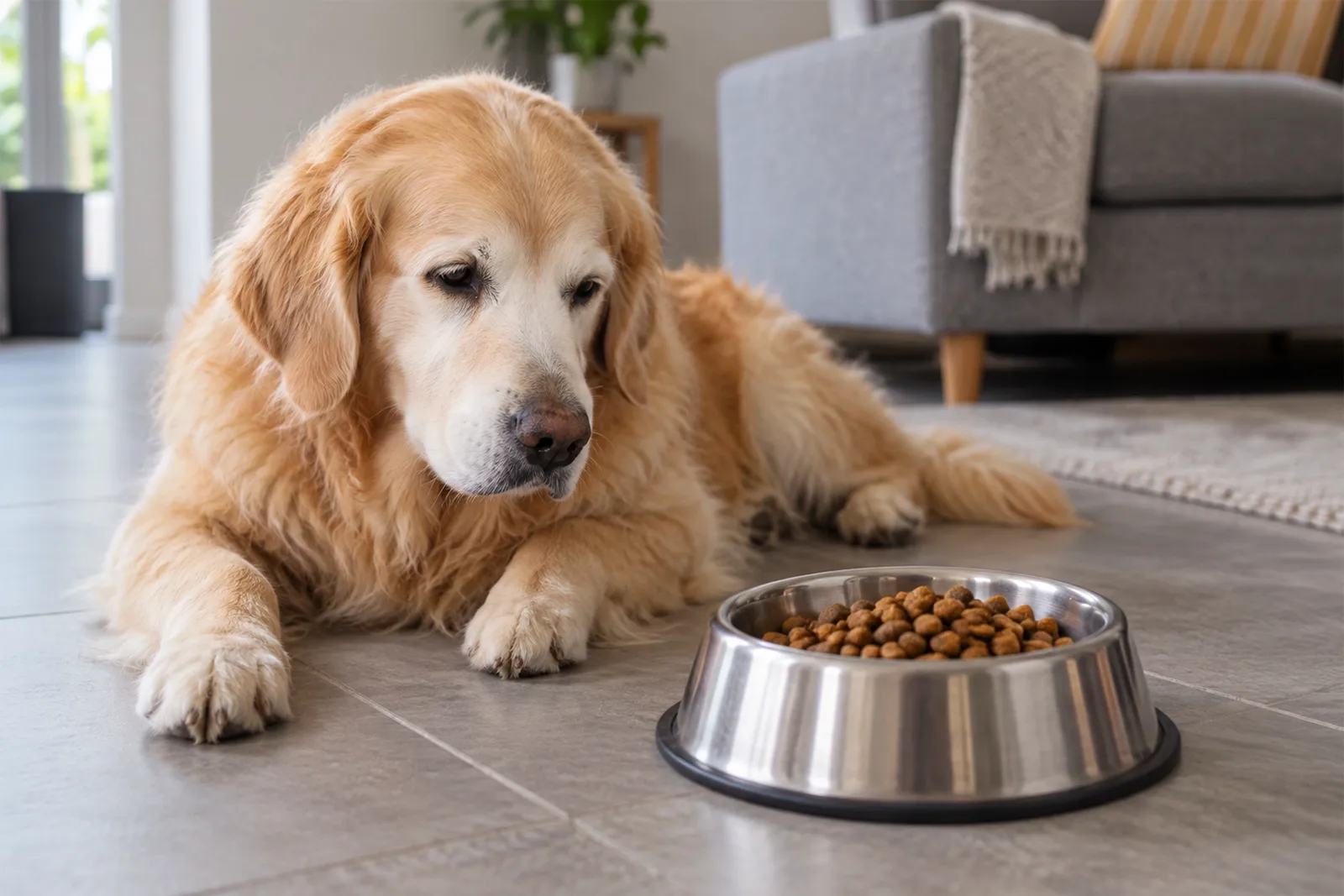
When a dog stops eating, the cause can be as ordinary as hot weather or as serious as pancreatitis, a swallowed object, or a painful tooth. At Parkview Pet Center in Madinat Khalifa North, Doha, Qatar, appetite loss is investigated rather than dismissed as fussiness, because dogs with nausea, dental pain, or abdominal discomfort often still take a favorite treat while refusing a normal meal. A physical and oral examination, blood and urine testing, digital X-ray, and ultrasound let the veterinary team work out whether the problem sits in the mouth, the gut, or somewhere else in the body. Most dogs that skip a single meal and otherwise seem normal can be watched for a short period, but a puppy, a painful abdomen, repeated vomiting, or 48 hours without food is never a wait-and-see situation, and warrants booking a consultation without delay.
What Does It Mean When a Dog Stops Eating?
Loss of appetite is a symptom, not a diagnosis, and it does not look the same in every dog.
Some dogs stop eating completely. Others still accept a treat or a particularly tempting food while turning away from their normal bowl. That difference can be useful information for the veterinarian, but it does not prove that a dog is simply being fussy — dogs with nausea, abdominal discomfort, or mouth pain may still be interested enough to take a favorite treat even while their normal appetite has genuinely disappeared.
What matters is the whole picture around the missed meal, not the meal alone. Whether the dog is still drinking, whether energy and mood are normal, and whether there is vomiting, diarrhea, or pain tell the veterinarian far more than whether one especially appealing food was accepted.
What to Check Before the Vet Visit
A few observations made before the appointment help the veterinarian work out where to look first.
Note how long it has been since your dog ate anything at all
Check whether your dog will take a favorite treat but refuse regular food
Confirm whether your dog is still drinking normally
Watch whether your dog is bright and moving normally, or unusually quiet
Note any vomiting or diarrhea
Watch for repeated lip-licking, drooling, or swallowing
Check whether the abdomen seems uncomfortable or swollen
Think about whether your dog could have scavenged food or eaten something unusual
Consider whether your dog could have reached medication, chocolate, grapes, raisins, xylitol, or another toxin
Look for bad breath, drooling, difficulty chewing, or chewing on one side
Note whether the weather has been unusually hot while your dog otherwise seems normal
When Not Eating Cannot Wait
Seek veterinary care promptly if any of these are present
Do not wait and watch if appetite loss occurs together with:
Puppies, particularly small ones, carry far less metabolic reserve than adult dogs, so even a short gap without food can let their blood sugar fall dangerously low. A puppy that skips one meal and otherwise seems completely normal is different from a puppy that stops eating and becomes weak, wobbly, or unusually quiet — the second calls for prompt veterinary attention rather than a wait-and-see approach.
Nausea, Stomach Upset, and Dental Pain
Two of the most common reasons a dog stops eating sit in different parts of the body, but both can look the same at first: a dog that approaches the bowl and turns away.
A temporary digestive upset is one of the more ordinary explanations, particularly after scavenging, eating unfamiliar food, or a sudden change of diet.
Lip-licking
repeated licking of the lips without an obvious reason
Drooling
more saliva than usual, sometimes pooling at the mouth
Repeated swallowing
swallowing motions with nothing in the mouth
Approaching then backing away
walking up to the bowl and turning away without eating
Vomiting
bringing up food, fluid, or foam
A hunched posture
standing or lying with the back arched, as if uncomfortable
These same signs — vomiting, abdominal discomfort, and reluctance to eat — can also appear with pancreatitis, an inflammation of the pancreas that ranges from a mild, self-limiting illness to a more serious condition. Because the presentation overlaps so closely with ordinary stomach upset, a veterinarian tells the two apart through examination and testing rather than from the signs alone.
A dog can also feel hungry and still find eating uncomfortable. Watch for the following clues to a painful mouth:
Bad breath
an odor that is new or has gotten noticeably worse
Drooling
saliva around the mouth, sometimes tinged with blood
Dropping food while chewing
food falls from the mouth partway through a bite
Avoiding hard food
reluctance to eat kibble or chews that require pressure
Chewing on one side only
favoring one side of the mouth consistently
Visible tooth damage
a fractured, discolored tooth, or pawing at the mouth
Normal interest in food does not rule out dental pain
Dogs can keep attempting to eat despite significant dental disease. Digital dental X-rays can help identify a fractured tooth or a root abscess hiding under normal-looking gum, which is often the only way to confirm a painful tooth is behind a reduced appetite.
Fever, Infection, and Pain Elsewhere in the Body
A quieter dog that stops eating is not always experiencing stomach trouble — the discomfort can be almost anywhere.
Fever and systemic infection can make a dog quieter and less interested in food, and the veterinarian will look for supporting clues such as temperature, gum color, hydration, and recent exposure history. In Qatar, tick-borne disease is sometimes part of that picture: research examining dogs living in Doha has documented vector-borne pathogens, including Ehrlichia, Babesia, and Anaplasma. Finding these organisms in local dogs does not mean every dog with a poor appetite has a tick-borne illness — it is one possible cause considered when the history and examination point toward it.
The painful area does not have to be the stomach at all. Dogs with orthopedic, spinal, or other pain often simply become quieter and eat less, rather than crying out or showing obvious distress, so a reduced appetite can be one of the more subtle signs that a dog is uncomfortable.
Limping
favoring one leg or an uneven gait
Stiffness
slow or stiff movement, especially after resting
Reluctance to move
avoiding stairs, jumps, or normal walks
Difficulty getting comfortable
repeated shifting or resettling before lying down
Trouble getting up
hesitating or struggling to rise from lying down
A sudden change in activity
noticeably less playful or active than usual
A Swallowed Object
A swallowed toy, sock, bone, or stone can partially or completely block the gut, and appetite loss is often one of the earliest clues.
Reduced or absent appetite
little or no interest in food
Vomiting
bringing up food, fluid, or foam, sometimes repeatedly
Lethargy
unusually low energy or withdrawal
Abdominal pain
a tense or sensitive abdomen when touched
Restlessness
pacing, unable to settle
Trouble keeping food or water down
vomiting shortly after eating or drinking
If something is missing from the house and your dog has stopped eating — especially if vomiting has started — tell the veterinarian before the examination begins. That detail can move the assessment straight toward imaging rather than working through the list of causes in order.
Hot Weather and Genuine Fussiness
Hot weather can genuinely take the edge off a dog’s appetite, but in Doha it should never be assumed while anything else looks abnormal.
A mild appetite change during hot weather is far more reassuring when your dog is:
Bright and responsive
Drinking normally
Not vomiting or having diarrhea
Moving normally
Breathing comfortably
Otherwise behaving exactly as usual
Heat is not always the explanation
A dog that is weak, heavily panting, vomiting, confused, unable to settle, or showing abnormal gum color after heat exposure needs urgent veterinary assessment rather than a wait-and-see approach at home.
Some dogs do become genuinely selective about food, but fussiness is worth considering only once medical causes have been reasonably excluded, particularly if refusing meals is new for that dog. Repeatedly swapping in more tempting foods can also make it harder to judge whether a normal appetite has actually returned, because the dog learns that holding out gets a better bowl.
Taking a treat while refusing the regular bowl is not proof that a dog is fine. Chicken, cheese, and other favorite foods can still tempt a dog with mild nausea, dental discomfort, abdominal pain, or early illness, so accepting them says less about health than the rest of the picture does — drinking, energy, stool, chewing behavior, and general activity.
How the Cause Is Found, and How It Is Treated
Once the history and a full physical and oral examination are complete, what happens next depends on what they turn up.
Physical examination
Checking temperature, hydration, gum color, and the abdomen, and looking for signs of pain.
Examination of the mouth
Checking for dental disease, fractured teeth, inflammation, injuries, or another painful oral problem.
Blood and urine testing
Recommended when infection, inflammation, organ disease, or another systemic problem is suspected.
Diagnostic imaging
Digital X-ray or ultrasound may be used when a swallowed object, obstruction, abdominal pain, or another internal problem is suspected.
There is no single treatment for a dog that will not eat, because treatment depends entirely on why the appetite disappeared in the first place.
Supportive care and rehydration
Correcting dehydration and providing supportive care while the underlying cause is identified.
Managing nausea and pain
Medication to control nausea or pain when clinically appropriate, so the dog is comfortable enough to eat again.
Treating the underlying cause
Addressing whatever the examination and testing found.
- Dental or oral disease
- An infection or other illness
- A gastrointestinal foreign object
Nutritional support
Providing appropriate nutritional support when normal eating cannot resume safely on its own.
The goal is not simply to make the dog eat again. The important step is finding and treating the reason the dog stopped eating in the first place.
When to See a Veterinarian
Contact a veterinarian sooner if there is:
- Vomiting or diarrhea
- Reduced water intake
- Pain or difficulty moving
- Bad breath or difficulty chewing
- Weight loss
- Lethargy or weakness
- Possible toxin exposure
- Possible foreign-object ingestion
- A swollen or painful abdomen
- Pale gums
Call +974 4417 1560 to book an assessment. If your dog seems seriously unwell outside regular hours, call the after-hours emergency line +974 5509 9494.
Do not wait 48 hours when other concerning symptoms are present. A dog that appears unwell, painful, weak, or unable to keep water down should be assessed sooner than that.
If your dog has stopped eating and the reason is not clear, book a veterinary consultation at Parkview Pet Center in Madinat Khalifa North, Doha.
Share this article
Frequently Asked Questions
Answers to the most common questions
1 How long can a dog go without eating before I should worry?
A healthy adult dog that skips one meal but otherwise seems completely normal can often be watched closely for a short period. If the appetite loss continues into the next day, veterinary advice is worthwhile, and more than 48 hours without eating should not be treated as a normal wait-and-see situation. Puppies and dogs with vomiting, weakness, pain, or reduced drinking need attention sooner.
2 Why will my dog eat treats but not regular food?
Highly tempting foods can still appeal to a dog with mild nausea, dental discomfort, or abdominal pain, so accepting a treat does not prove a dog is simply being fussy. Drinking, energy, vomiting, stool, chewing behavior, and general activity matter more than whether one appealing food was accepted.
3 Can hot weather make my dog eat less in Doha?
Yes, some otherwise healthy dogs eat less during very hot weather. Heat is a more reassuring explanation when the dog stays bright, drinks normally, breathes comfortably, and shows no vomiting, diarrhea, or weakness.
4 Could my dog’s teeth be causing the problem?
Yes, dental disease, oral inflammation, fractured teeth, and other mouth problems can make eating painful even when a dog still feels hungry. Watch for bad breath, drooling, dropping food, chewing on one side, or avoiding harder foods.
5 What tests might my dog need if he will not eat?
Testing depends on what the veterinarian finds during the physical and oral examination. Blood and urine testing can help investigate systemic illness, and digital X-ray or ultrasound may be recommended when abdominal disease, a swallowed object, or an obstruction is suspected.
Related Services
Other services you may need

Written by
Dr. Luis PenaDVM, Veterinary Surgeon • Soft Tissue Surgery, General Surgery, Gastrointestinal Medicine
Part of the veterinary team at Parkview Pet Center, Madinat Khalifa North, Doha, Qatar.
View full profileConcerned About Your Pet?
Book a consultation with our veterinary team in Doha.