
Fleas on Cats in Qatar: Why They Keep Coming Back and What to Do
Medically reviewed · • Updated
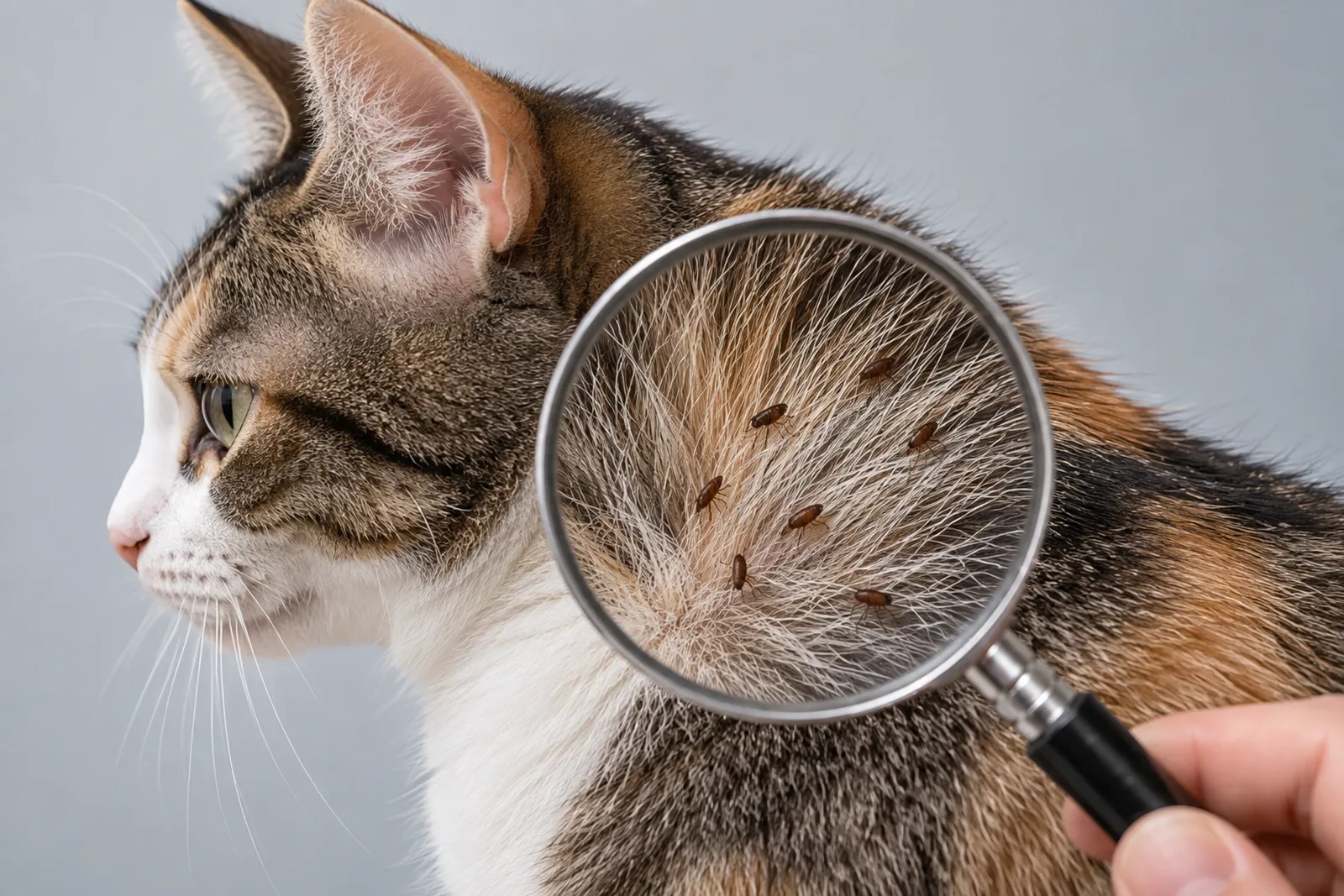
Finding fleas on a cat, whether the cat goes outdoors or stays inside, is one of the more common reasons owners bring a cat to Parkview Pet Center in Madinat Khalifa North, Doha, Qatar. A single flea rarely means a single flea: eggs are already falling into bedding, carpets, and furniture before an owner notices anything on the cat itself, which is why treating only the flea in view is often not enough. Qatar’s climate adds to the problem, because the prolonged cold winter that interrupts flea activity in many temperate countries does not happen here, so prevention that lapses even briefly can let an infestation restart. Parkview Pet Center, established in 2011, examines cats for fleas, flea-related skin disease, and the intestinal parasites fleas can carry, and helps build a prevention plan suited to each cat and household.
When Fleas on a Cat Cannot Wait
Most flea infestations are not emergencies, but a few situations need prompt veterinary attention rather than home treatment.
Contact a Veterinarian Promptly If
Any of the following applies:
Why Do Fleas Keep Coming Back?
The flea an owner sees on the cat is only one stage of a much longer life cycle already under way in the home.
Adult fleas live and feed on the cat, but their eggs fall away from the coat wherever the cat rests. Those eggs develop into larvae, then pupae, then new adult fleas, mostly out of sight:
Warm, undisturbed fabric holds the eggs and larvae that fall from the coat while a cat sleeps.
Fibers trap eggs and larval debris well below where surface cleaning ever reaches.
Dark, undisturbed gaps beneath sofas and cushions suit developing flea stages well.
A car seat, a cat tree, or a stack of towels can become a small reservoir just as easily.
New adult fleas can keep emerging from these hidden stages for weeks after treatment on the cat begins, which is why an owner may treat a cat carefully and still see fleas afterward. The Companion Animal Parasite Council notes that an infestation already established in a home can take several months to bring fully under control. Consistent, species-appropriate flea control for every dog and cat in the household — not just the cat where fleas were first seen — is what actually breaks the cycle.
Can an Indoor Cat Get Fleas?
Yes. An indoor-only cat does not need to go outdoors to encounter fleas, and finding them does not mean the home is dirty.
Fleas or flea eggs travel indoors on another pet, on a visitor’s clothing or shoes, or on anything brought in from outside. Once even a few eggs reach a carpet, a piece of bedding, or a quiet corner of the house, the stages already described above can develop indoors without the cat ever leaving the building.
A note from Dr. Julieta Cavalcante
The one thing owners most often get wrong is thinking that because a cat stays indoors, fleas cannot be the problem. Fleas and flea eggs are carried in on clothing, shoes, other pets, or visitors, and because cats groom themselves so efficiently, an owner may never actually see a live flea. When a cat is suddenly itching, overgrooming, biting at the skin, or developing small scabs, fleas should still be considered — even if that cat never goes outdoors.
A more useful set of questions than whether the home is clean is whether every other dog and cat in the household is currently protected, whether there have been gaps in that protection, and whether fleas are continuing to emerge from somewhere in the home rather than being reintroduced from outside.
How Can I Check My Cat for Fleas?
Cats are efficient groomers, and many remove adult fleas before an owner ever sees one — which is why flea dirt and skin changes are often easier to find than a live flea.
Use a flea comb
Comb gently through the coat, paying particular attention to the back, the base of the tail, the neck, the belly, and any area the cat has been scratching or licking. Look for tiny black or reddish-black specks caught in the teeth of the comb.
Check for flea dirt
Place any dark debris collected from the coat onto a damp white tissue. Flea dirt contains digested blood, so when it is moistened it dissolves and leaves a reddish-brown stain — evidence of flea exposure even when no live flea is ever seen.
Look at the skin and coat
Beyond the fleas themselves, the skin and coat often show whether an infestation has been going on for a while, and whether a reaction to flea saliva has started.
Some cats develop flea allergy dermatitis, a hypersensitivity reaction to flea saliva. A sensitive cat can show considerable itching, crusting, or self-induced hair loss from only a very small number of fleas, which is one reason the skin and coat are worth checking even when live fleas are hard to find:
Frequent scratching
the cat stops to scratch repeatedly rather than in a single grooming pass
Excessive licking or chewing
focused, repeated grooming at one area of the body
Small crusts or scabs
raised, healing marks where the skin has been broken by scratching
Red or irritated skin
visible inflammation under the coat, especially at the base of the tail
Hair thinning
the coat looks sparser than usual over one area
Bald patches
areas where hair has been groomed or scratched away entirely
When the reaction outweighs the fleas
A cat with flea allergy dermatitis can look far more affected than the number of fleas on the coat would suggest, because the reaction is to flea saliva rather than to the fleas themselves. Seeing very few fleas does not rule this out, and ongoing flea prevention is part of managing it either way.
What Should I Check Before the Veterinary Visit?
A few observations made before the appointment help the veterinarian work out quickly whether this is a straightforward flea infestation or whether something else — flea allergy, secondary skin disease, or another parasite — is also involved.
Note when you first noticed fleas on your cat
Note whether you are still seeing live fleas or mainly flea dirt
Note where your cat is scratching, licking, or chewing
Note any scabs, bald patches, or areas of open skin
Note when parasite prevention was last given
Note whether every other dog and cat in the household is protected
Note whether other pets in the home are also scratching
Note whether anyone in the home has flea bites, or whether small pale segments have appeared near the tail, on bedding, or in the stool
How Do I Get Rid of Fleas on My Cat?
Effective flea control usually needs three things working together, and removing only the adult fleas currently visible on the cat rarely stops an infestation on its own.
Flea Control Made for Cats
Flea prevention should be chosen for the individual cat’s age, weight, health, and lifestyle. A product formulated for dogs is not an acceptable substitute — cats can be particularly sensitive to some of the insecticides used in dog products. Ask a veterinarian before using any product you are unsure about.
Protect Every Pet in the Household
If one cat has fleas, every dog and cat sharing that home needs its own species-specific flea control. Leaving even one animal untreated can allow the flea population to continue, and a product safe for one pet is not automatically safe for another.
Address the Home Environment
Flea eggs and larvae can already be present wherever pets spend time, so the home needs attention alongside the cat.
- Wash pet bedding in hot water
- Vacuum carpets, rugs, furniture, and areas where pets sleep
- Pay particular attention to furniture crevices, edges, and protected areas
- Empty or dispose of the vacuum bag or contents promptly after cleaning
These three parts work together rather than in sequence, because eggs and larvae already in the environment keep developing regardless of what is done to the cat. New adult fleas can continue emerging for weeks after treatment starts, which is the most common reason an owner treats a cat and still sees fleas afterward. The Companion Animal Parasite Council notes that an infestation already established in a home can take several months to bring fully under control, so consistent protection matters more than expecting an infestation to disappear immediately. For a heavy or persistent infestation, professional pest control can also be considered. Tell the pest-control provider that cats and other pets live in the household so any treatment and re-entry instructions are appropriate for pets.
Can Fleas Give My Cat Tapeworms?
Yes — fleas are the way most cats become infected with a common intestinal tapeworm.
The tapeworm Dipylidium caninum uses the flea as an intermediate host, and a cat becomes infected by swallowing an infected flea while grooming. Owners sometimes notice small tapeworm segments around the anus, on the fur beneath the tail, on bedding, or in fresh stool, and they are often described as looking like small grains of rice or cucumber seeds. Treating the tapeworm without also controlling the fleas allows the cat to become reinfected quickly, so the two are addressed together rather than as separate problems.
Why Flea Prevention Matters Year-Round in Doha
Owners who moved to Qatar from a colder country may be used to thinking of fleas as a seasonal problem, and Doha does not work that way.
Fleas are interrupted by a prolonged cold winter in many temperate climates, and Qatar does not have one. Warm conditions and protected indoor environments let an infestation persist through every month of the year, which is why professional parasite-control guidance recommends year-round flea prevention for cats rather than a treatment that starts and stops with the seasons.
Do not stop prevention when summer ends
An indoor cat is not automatically protected simply because it rarely or never goes outside, and a prevention plan that lapses because the weather has cooled leaves that cat exposed exactly when nothing in the environment is slowing the fleas down.
What Happens During a Veterinary Visit for Fleas?
A visit for fleas usually starts with an examination of the coat and skin, looking for live fleas or flea dirt, and can extend further when something else seems to be going on.
Flea Allergy Dermatitis
A hypersensitivity reaction to flea saliva that can cause more itching and skin damage than the number of fleas present would suggest.
Hair Loss or Bald Patches
Areas where grooming or scratching has removed hair faster than it regrows.
Secondary Skin Infection
Broken, weeping, or infected-looking skin that has developed from persistent scratching.
Anemia in a Heavily Infested Kitten
A young cat with a heavy flea burden can become pale, weak, or unsteady, particularly if the infestation has been present for some time.
Evidence of Tapeworm
Segments or other signs suggesting the flea-associated tapeworm is also present.
The Current Prevention Plan
Whether the product being used, and how it is being used, actually fits the cat’s age, weight, and lifestyle.
Further investigation becomes worthwhile when a cat shows significant itching, hair loss, or skin lesions alongside the fleas, because these can mean flea allergy dermatitis or a secondary infection is also present and needs its own treatment plan rather than resolving once the fleas themselves are gone.
Arrange a consultation if:
- Fleas keep appearing despite consistent prevention
- Your cat is scratching frequently or cannot settle
- There are bald patches, crusts, sores, or inflamed skin
- Your cat is grooming or chewing the coat excessively
- You see what might be tapeworm segments near the tail or on bedding
- You are unsure whether a flea product is appropriate for your cat
- A kitten has a significant flea infestation
- Several pets in the household are affected
Call +974 4417 1560 to book a consultation at Parkview Pet Center in Doha.
If fleas keep returning, your cat is scratching or losing hair, or you are unsure which flea prevention is right for your cat, book a consultation at Parkview Pet Center. A tailored flea-control plan, and an examination for flea-related skin disease or tapeworm, both start with that visit.
Share this article
Frequently Asked Questions
Answers to the most common questions
1 Can my indoor cat get fleas even if she never goes outside?
Yes. Fleas can enter a home through another animal or an infested environment, and immature flea stages can then develop indoors. Indoor-only cats are therefore not automatically protected from fleas.
2 Why am I still seeing fleas after treating my cat?
Eggs, larvae, and pupae may already be developing in the home. New adult fleas can continue emerging after treatment begins, so an established infestation may take time and consistent control to eliminate.
3 Do I need to treat my other pets if only one cat has fleas?
Every dog and cat in an affected household should have appropriate species-specific flea control. An untreated pet can allow the flea population to continue.
4 Can fleas cause worms in cats?
Yes. Cats can acquire Dipylidium caninum tapeworm by swallowing an infected flea while grooming. Controlling the fleas is an important part of preventing reinfection.
5 Can I use my dog's flea treatment on my cat?
Do not use a dog-only flea or tick product on a cat unless a veterinarian has confirmed that the exact product is safe for that cat. Some insecticides used in dog products can be highly toxic to cats.
Related Services
Other services you may need

Written by
Dr. Julieta CavalcanteDVM, Veterinarian • Dermatology, Dental Care & Stomatology, Neurology
Part of the veterinary team at Parkview Pet Center, Madinat Khalifa North, Doha, Qatar.
View full profileConcerned About Your Pet?
Book a consultation with our veterinary team in Doha.