
Moving Your Pet to or From Qatar: What to Know Before You Start
Updated
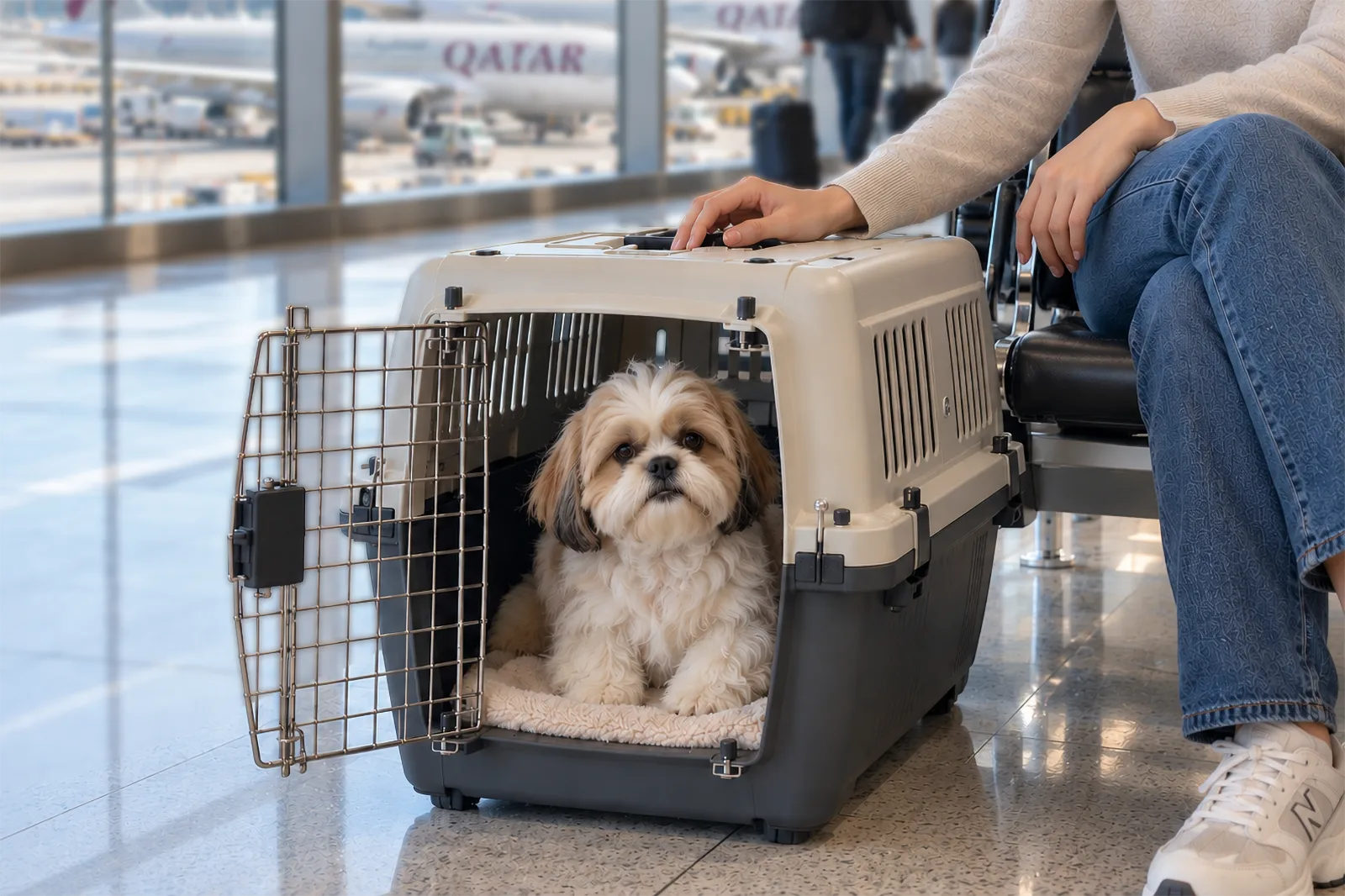
Moving a dog or cat to or from Qatar is a pet relocation process that involves more than booking a flight. Microchip records, vaccination history, government paperwork, airline rules and, for many destinations, a rabies antibody test all have to align on a timeline the destination sets, not the travel date. Parkview Pet Center, at Madinat Khalifa North in Doha, Qatar, works through this process with owners: reviewing the planned journey, identifying which documents and tests the route actually requires, collecting the blood sample for a rabies titer test when one applies, and coordinating the health certificates and import or export paperwork Qatar and the destination country both ask for. Most relocations need around four to six months of lead time, and some destinations need longer, so the review should start well before any flight is booked.
When Should I Start Planning Pet Relocation From Qatar?
For most international moves, start planning four to six months before the travel date, and earlier for destinations that require a rabies antibody test or a longer waiting period after it.
Starting early gives you time to:
Check your pet’s microchip number and vaccination records
Confirm the specific requirements of the destination country
Review any transit-country requirements along the route
Check airline and breed restrictions for every leg of the journey
Arrange a travel crate that meets the applicable size and airline standards
Correct any documentation problems well before the departure date
Certain requirements run in a fixed sequence that cannot be shortened by booking an earlier flight. A rabies titer test, where one applies, has to follow the vaccination by a set interval, then wait on the laboratory’s processing time, then sit inside whatever waiting period the destination sets before entry, and some of these steps cannot run in parallel. The relocation timeline should be built around what your pet’s journey actually requires, not around a flight that has already been booked.
Common Pet Relocation Planning Mistakes
Gladyzzel Mazo, Pet Relocation Specialist at Parkview Pet Center, sees the same three mistakes recur at the start of a move, each for a different reason.
Leaving paperwork to the last minute
“They assume they can complete the paperwork and meet all the requirements at the last minute before travel,” says Gladyzzel Mazo, Pet Relocation Specialist at Parkview Pet Center. International pet travel can carry fixed waiting periods and sequencing rules that no amount of urgency shortens.
Confusing a vaccination with a titer test
“They mistake a rabies vaccination for a rabies titer test,” Mazo says. A vaccination protects the animal; a titer test is a separate blood test that measures the immune response to it, and many destinations require both, in a defined order.
Assuming a household carrier will do
“They assume a regular pet cage is acceptable for air travel,” Mazo says. Airlines and destination authorities apply container standards that a household cage is not built to meet.
These are three separate problems, not one. International paperwork can carry fixed timelines that no amount of urgency shortens. A rabies vaccination and a rabies antibody test serve different purposes, one protects the animal and the other proves the protection worked, and a destination that requires the test will not accept the vaccination record in its place. A travel crate also has to meet standards a household cage was never built to, which is usually discovered at the airport rather than before it.
What Should I Check Before Booking My Pet’s Move?
Start with the complete journey, not a single document. The requirements change with the route, not only the destination.
Before finalizing arrangements, know:
Where your pet is travelling from
The final destination
Any transit or stopover countries on the route
The airline or airlines involved
Your pet’s breed and approximate size
Your pet’s microchip number and vaccination history
The intended travel date
Widely used industry guidance, including that published by the International Air Transport Association, advises checking the destination’s requirements, considering any intermediate stops, and confirming animal acceptance with the airline before booking, because a transit country can apply its own rules even when a pet never leaves the aircraft there. Do not assume that requirements followed for a different pet, or found on an older checklist, will apply unchanged to this journey.
What Documents Does My Pet Need to Travel Internationally?
There is no single list of documents that applies to every move. What a specific journey needs depends on the destination, the route and the airline.
Depending on the journey, a dog or cat may need:
Microchip identification that matches every other document
A complete vaccination record, not only the most recent rabies vaccine
Rabies vaccination documentation, separate from any antibody test result
A veterinary health certificate
Import or export documentation for the countries involved
Government certification or endorsement, where the destination requires it
Airline-specific paperwork
A rabies antibody test result, where the destination requires one
These documents only matter as a set. A single missing endorsement, or a certificate issued a day outside its validity window, can stop a pet at departure even when every other document is in order, so the question to ask is whether the complete file works for this destination and this route, not whether any one document is correct on its own.
A dedicated guide covers what a health certificate does and does not cover: read the health certificate guide.
Does My Pet Need a Rabies Titer Test?
Some destinations require a rabies antibody test before entry; others do not, so the answer depends entirely on where your pet is travelling.
A rabies titer test is a blood test, commonly run as the Fluorescent Antibody Virus Neutralization (FAVN) test, that measures the antibody response a pet’s immune system produced after rabies vaccination. It is not a substitute for the vaccination record, and it is not the same procedure as the vaccination itself, it is a separate, later step that some rabies-free countries and regions require specifically for incoming dogs and cats. Where it is required, timing drives the whole plan: the vaccination, the blood draw, the laboratory’s processing time, and any destination-specific waiting period after a passing result typically have to happen in that order, and none of them can be skipped to save time.
Titer testing coordinated in Doha
Parkview Pet Center can collect the blood sample for a rabies titer test in Doha and coordinate its submission to an approved laboratory for the destination.
The full process is covered in the Rabies Titer Test guide.
What Travel Crate Does My Dog or Cat Need?
Your pet needs a container built to the standard the airline and the destination apply, not simply one that is big enough at home.
Industry container standards for air travel require enough room for a dog or cat to stand and sit erect, turn around normally while standing, and lie down in a natural position, and individual airlines can add requirements on top of that baseline. A carrier that comfortably holds a pet at home, or in the car, is not automatically built to that standard, since ventilation, door mechanisms and structural rigidity are all checked at departure, and a cage that fails any one of them can keep a pet off the flight it was booked on.
Confirm the crate before you confirm the flight
Check the required container against the airline’s own published specification and against the destination’s rules, not against a previous trip or another owner’s experience. Crate requirements are not identical across airlines, and a container accepted on one route is not guaranteed acceptance on another.
How Should I Prepare My Pet Before Travel?
Preparation in the weeks before travel is less about the flight itself and more about reducing surprises at check-in.
Introduce the crate early
Give a dog or cat time with the travel container well before departure, rather than on travel day itself. A pet that has rested and eaten in the crate at home associates it with something familiar, which reduces the stress of confinement during the actual journey, and a calmer pet is also an easier pet to process at the airport.
Check identification and documents together
Read the microchip number on every document side by side, not only on the one the airline asks for first. If a number, a name or a date does not match across the file, have it corrected before departure. Airlines and border authorities are not required to accept a mismatch, and there is no step at the airport that fixes it on the spot.
Follow feeding guidance for this pet, not a blanket rule
Industry guidance favors a light meal before travel over a universal fasting rule, because withholding food from every animal regardless of age, health or anxiety level is not itself a safety requirement. What a particular dog or cat should eat, and when, is better confirmed with a veterinarian close to the travel date than assumed from a general rule applied to every pet.
Planning a move for your dog or cat to or from Qatar? Talk to Parkview Pet Center’s relocation team about the documents, testing and crate requirements this specific journey needs.
Share this article
Frequently Asked Questions
Answers to the most common questions
1 How far in advance should I start planning my pet's relocation to or from Qatar?
For most international moves, start around four to six months before the travel date. Some destinations need longer, particularly where a rabies antibody test or a waiting period after it applies. Call +974 4417 1560 to have the planned journey reviewed before anything is booked.
2 What is the difference between a rabies vaccination and a rabies titer test?
A rabies vaccination protects the animal. A rabies titer test is a separate blood test, run after vaccination, that measures the antibody response the vaccine produced. Many rabies-free destinations require the test specifically, and will not accept the vaccination record as a substitute.
3 Can I use my pet's regular carrier for the flight?
Not automatically. Airlines and destinations apply container standards that a household cage is not built to meet, covering size, ventilation and structural requirements. Confirm the required specification with the airline before relying on a carrier your pet already owns.
4 What documents does my pet need to travel internationally?
It depends on the destination, the route and the airline, so there is no single list that applies to every move. Depending on the journey, a dog or cat may need microchip identification, a full vaccination record, a veterinary health certificate, import or export paperwork, and sometimes a rabies antibody test result.
5 Can Parkview Pet Center help with the rabies titer test?
Yes. Parkview Pet Center can collect the blood sample for a rabies titer test in Doha and coordinate its submission to an approved laboratory for the destination. Call +974 4417 1560 to discuss the timing this requires for your pet's journey.
6 Does the relocation timeline change if my pet is travelling through another country first?
Yes. A transit country can apply its own entry or transit rules even if your pet never formally enters it, so the route matters as much as the final destination. Confirm transit-country requirements alongside the destination's own rules before booking.
Related Services
Other services you may need

Concerned About Your Pet?
Book a consultation with our veterinary team in Doha.