
Traveling With Your Pet From Qatar? Is a Health Certificate Enough?
Updated
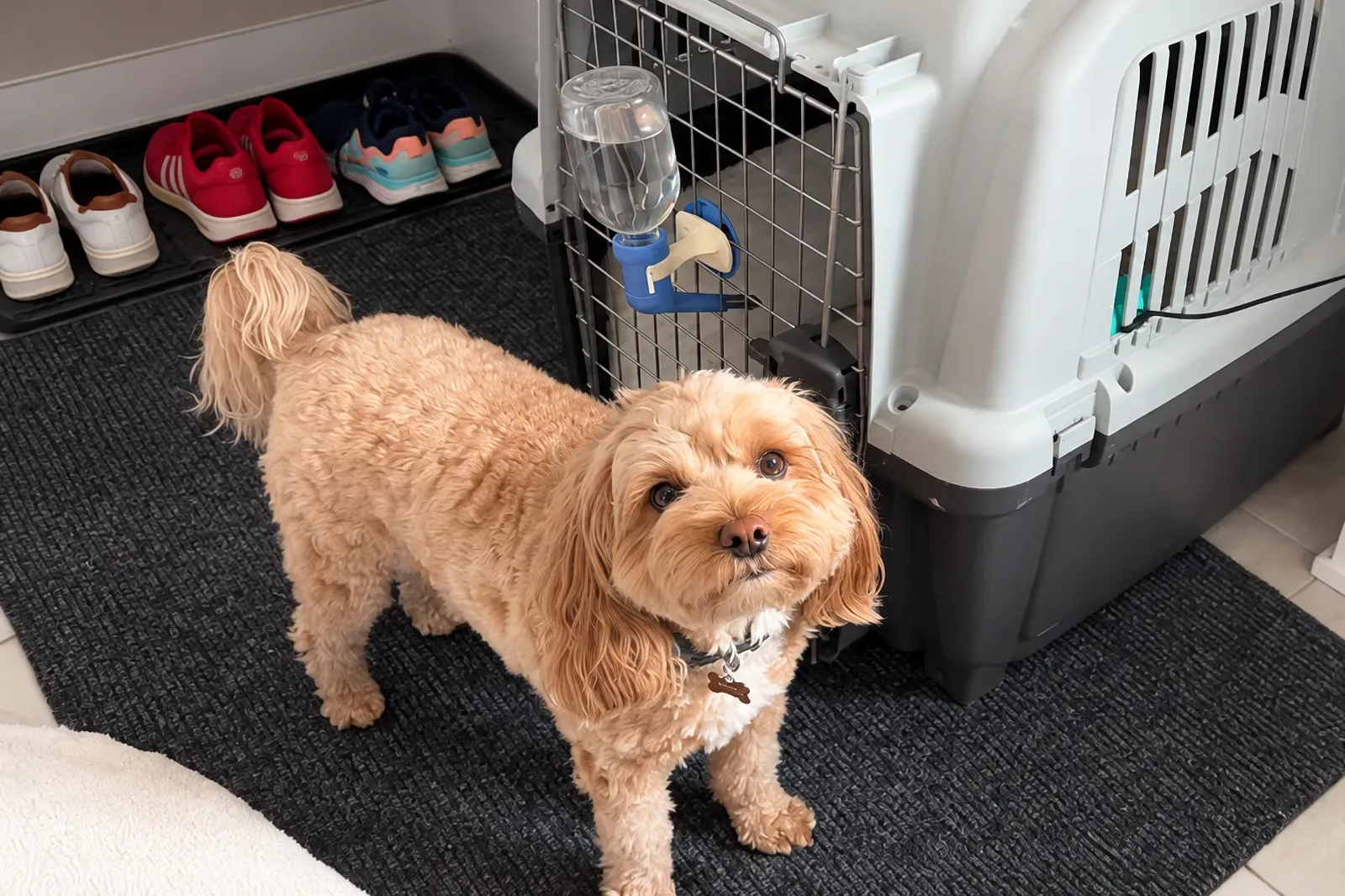
Yes, dogs and cats traveling internationally from Qatar need a veterinary health certificate, but the certificate alone does not always complete the journey. Depending on the destination, route and airline, owners may also need microchip and vaccination records, a rabies antibody test, government or destination-country documentation, airline-specific paperwork and a travel crate that meets carrier standards. A transit country can add its own requirement even when the final destination does not ask for it, so each leg of the journey needs to be checked on its own terms. Parkview Pet Center, established in 2011 in Madinat Khalifa North, Doha, Qatar, reviews the destination and route with the owner and coordinates the veterinary documentation and pet-relocation steps the journey needs, from the health certificate itself through microchip verification, rabies titer blood collection and travel-crate sizing before departure.
A common mistake
“A common mistake I see is pet owners thinking that the health certificate alone is enough for international travel.” — Gladyzzel Mazo, Pet Travel Consultant, Parkview Pet Center
What Is a Pet Health Certificate?
A pet health certificate is the veterinary document that opens the door to international travel — but it is one document among several, not the whole file.
A pet health certificate is a veterinary document issued ahead of international travel with a dog or cat. Depending on the destination, it can include the pet’s identification and microchip details, a summary of vaccination records, the findings of a physical examination, any treatments the destination requires beforehand, laboratory-test information where it applies, and a declaration written to that destination’s own wording. What it contains is not fixed — it is built around the country the pet is actually entering.
Is a Health Certificate Enough to Travel Internationally?
No. A health certificate is required, but it is not necessarily the only document your pet needs.
Destination-country requirements
What the receiving country asks for before it will admit the pet.
Qatar departure requirements
What must be arranged on the Qatar side before the pet leaves.
Airline requirements
What the specific carrier accepts, and how it wants the paperwork presented.
Route and transit-country requirements
Any additional rule introduced by a country the pet passes through, even briefly.
These four areas are not the same check repeated four times. A transit country can add a rule that neither the final destination nor Qatar’s own procedures ask for, and an airline can decline an otherwise compliant certificate if it does not accept the species, breed or crate presented at check-in. Confirming each one separately, and early, is what keeps a compliant pet from being delayed at the gate or turned back on arrival.
What Other Documents Might My Dog or Cat Need?
A health certificate sits alongside several other documents, and each one answers a different question.
Veterinary health certificate
Veterinary information required for international travel.
Microchip record
Identification of the dog or cat.
Vaccination records
Evidence of required vaccinations.
Rabies antibody test result
Laboratory evidence required for certain destinations.
Import authorization
Permission to enter the destination where required.
Government endorsement
Official veterinary validation where required.
Qatar export documentation
Requirements connected with leaving Qatar.
Airline documents
Carrier-specific acceptance and transport requirements.
Travel crate
Applicable transport and airline container requirements.
A health certificate, an export certificate, an export permit and an import permit are not the same document, even though the terms are sometimes used loosely. Each is issued by a different authority, for a different purpose, and satisfying one does not automatically satisfy another. The exact terminology, and which of these a specific journey actually needs, has to be checked against the destination, the route and the airline involved — not assumed from a previous trip or another owner’s experience.
What Does Qatar Require When My Dog or Cat Travels Abroad?
Qatar-side documentation is checked separately from what the destination country, the airline and any transit country ask for.
What Qatar itself requires before a pet leaves is its own, distinct step in the process — it does not substitute for the destination’s entry requirements, and the destination’s requirements do not substitute for it. Qatar’s Animal Health Certificate System describes its own service as “Issuing veterinary health certificates and import permits,” a description of that system’s scope rather than a rule that applies to every destination or airline. Both sides of the journey have to be satisfied, in the terms each authority actually uses.
See Pet Export From Qatar for what is currently required on the Qatar side of the journey.
Is a Pet Health Certificate the Same as an Export Permit?
No. They serve different purposes.
“Pet Health Certificate is a document issued by local vet certifying the pet is healthy and fit to travel and should not be mistaken as the only document required to depart from Qatar to another country. Export permit is issued from the government authority and approved by an official government veterinarian.” — Gladyzzel Mazo, Pet Travel Consultant, Parkview Pet Center
Can Government Endorsement Be Required?
It depends on the destination. Where the European Union is used as an example, current European Commission rules can require a specific veterinary certificate or declaration forms to be attested by an official government veterinarian in Qatar before departure — a requirement tied to the European Commission, not to international travel generally.
“Only if the destination country requires a specific veterinary certificate or declaration forms to be attested by the official veterinarian in Qatar.” — Gladyzzel Mazo, Pet Travel Consultant, Parkview Pet Center
Does My Dog or Cat Need a Rabies Titer Test?
It depends on the destination.
Rabies antibody titration testing is required for certain destinations, not for every international journey a pet from Qatar might make. Where it is required, it generally exists to confirm that a vaccinated pet has mounted an adequate immune response before the destination will accept it, and the acceptable timing relative to vaccination is set by that destination, not by Parkview Pet Center. The European Commission is one example of an authority with published titer-testing rules for entry into the European Union — a different destination can have a different rule, or none at all, and the two should never be assumed to match.
Where testing is required, Parkview Pet Center can collect the blood sample in Doha and coordinate submission to the appropriate laboratory. The analysis itself is carried out externally, not on site.
See Rabies Titer Testing at Parkview Pet Center for more on when this test applies and how sample collection works.
Check the Microchip, Vaccination and Testing Sequence
It is VERY IMPORTANT the pet is microchipped before the rabies vaccine is administered and before the rabies titer test is performed. Current European Commission requirements for entry into the European Union are one clear example of why this sequence matters: a vaccination given before the microchip is in place, or a titer test drawn before the vaccination, can be rejected outright under those rules. The same principle can apply to other destinations, so the order should always be checked against that destination’s own requirement before any step is taken.
Can My Airline Have Different Requirements?
Airlines set their own rules on top of whatever the destination and Qatar require.
“Yes, Acceptance of pets in the cabin, as checked baggage, or as cargo varies by airline. Breed restrictions and approved travel-crate dimensions are also subject to each airline’s safety policies and regulations.” — Gladyzzel Mazo, Pet Travel Consultant, Parkview Pet Center
The airline actually carrying the pet is the one whose current policy matters — a rule that applied on a previous booking, or with a different carrier, does not carry over automatically. For example, Turkish Airlines currently states that a pet and its carrier can travel in the passenger cabin when their combined weight is 8 kg or less; if the combined weight exceeds 8 kg, different transport arrangements apply. That is a Turkish Airlines rule, not a standard every airline follows, and a different carrier can set a different limit or none at all.
See Airline Pet Policies From Doha for how Parkview checks a specific carrier’s current requirements.
What Travel Crate Does My Dog or Cat Need?
A travel crate has to meet the standard the airline is actually working from, not just look large enough.
Commercial air-transport standards for pet crates are set out in the IATA Live Animals Regulations. Under IATA Container Requirement 1 for dogs and cats, the animal must have enough space to stand normally, sit erect, turn around normally while standing, and lie down in a natural position — the crate is sized to the animal, not to what looks convenient to carry. Individual airlines can add their own requirements on top of the IATA standard, including specific dimensions, ventilation or labeling, so the airline’s own current policy still needs to be checked before a crate is bought.
See Pet Travel Crates for sizing guidance against IATA and airline requirements.
What Should I Have Ready Before the Travel Documents Are Finalized?
Two things need to be ready before travel documents can be finalized: the practical details of the journey, and enough time for each requirement to be met.
Destination country
Approximate travel date
Full route and transit points
Airline
Microchip details
Vaccination records
Rabies titer results, where applicable
Existing permits or government documents
Destination-specific forms
Travel-crate information
Identifying information matters as much as having the documents themselves — particularly the microchip number, which should read identically on the pet’s microchip, its vaccination records, its health certificate and any permit. A mismatch anywhere in that chain is one of the more common reasons paperwork gets sent back for correction.
How Early Should I Start Planning Pet Travel From Qatar?
“The timeline varies depending on the destination, NOT ALL but most pet relocation processes can be completed within 4–6 months.” — Gladyzzel Mazo, Pet Travel Consultant, Parkview Pet Center
Why some destinations take longer
Vaccination requirements
Some destinations require a vaccination course completed and boostered on a fixed schedule before travel is possible.
Rabies antibody testing
Blood collection, external laboratory analysis and a result the destination will accept can add weeks on their own.
Required waiting periods
Certain destinations require a fixed interval after vaccination or testing before entry is allowed.
Government documentation
Endorsement or attestation by an official veterinarian can only happen once every earlier document is ready.
Import requirements
A destination-country import permit can take its own processing time, separate from the veterinary paperwork.
Airline and transit arrangements
Booking pet-approved space and confirming a route through any transit country can only be finalized once the other requirements are known.
These factors do not always run one after another, but several of them do depend on each other: a titer test cannot be drawn before the required wait after vaccination, and a government endorsement cannot be requested before the certificate and any earlier lab result are ready. That is why the same quoted timeframe does not fit every destination, and why starting early gives each step room to run its own course rather than being compressed at the end.
How Parkview Pet Center Helps With Pet Travel From Qatar
Depending on the destination and route, Parkview Pet Center supports the veterinary and logistical side of the journey.
Destination-country requirement research
Reviewing what the specific destination and route currently ask for.
Pre-travel veterinary examinations
A physical examination to confirm the pet is fit to travel.
Veterinary health certificates
Issuing the certificate itself once the examination and records are in order.
Microchipping
Implanting or verifying a microchip that matches the pet’s travel documents.
Vaccination-document review
Checking that vaccination records meet the destination’s timing and content requirements.
Rabies titer blood collection and laboratory coordination
Collecting the blood sample in Doha and coordinating submission to the appropriate external laboratory.
Travel-document coordination
Keeping the certificate, permits and airline paperwork consistent with each other.
Travel-crate supply and sizing guidance
Supplying a crate sized to the pet and checked against airline requirements.
Airline and customs coordination
Coordinating airline acceptance, customs clearance and airport logistics for the journey.
Not every journey needs every one of these — a straightforward destination with no titer requirement, for instance, skips the laboratory-coordination step entirely. Which of these apply is worked out once the destination and route are known, which is also the point at which it is worth getting in touch.
See Pet Health Certificates for what a Parkview pre-travel veterinary exam and certificate involves.
When Should I Contact the Pet Relocation Team?
Contact Parkview Pet Center once you know your destination and approximate travel date.
Reaching out that early — before every document is finalized — is what allows the destination, route and airline requirements to be checked against each other while there is still time to act on what turns up. It also means any laboratory testing with its own waiting period can be started sooner rather than later.
Have ready, where possible:
Planning to Travel With Your Dog or Cat?
Once the destination and travel date are known, the rest of the journey can be planned around them.
Ready when you are Reach out with the destination and approximate travel date, and the Parkview pet relocation team will help map out what the journey actually requires.
Contact Parkview Pet Center’s pet relocation team in Doha once you know your destination and approximate travel date. Have your pet’s microchip and vaccination records available where possible so the team can review the requirements for the journey.
Share this article
Frequently Asked Questions
Answers to the most common questions
1 Do I need a pet health certificate to travel from Qatar?
Yes. A veterinary health certificate is required for international travel with a dog or cat from Qatar. It is not, however, the only document most journeys need — the complete list depends on the destination, the route and the airline carrying the pet.
2 Is a pet health certificate the same as an export permit?
No. They serve different purposes. A health certificate is issued by a veterinarian to confirm the pet is fit to travel; an export permit, where one is required, is issued by a government authority and approved by an official government veterinarian.
3 What documents do I need to take my dog or cat out of Qatar?
The complete file can include identification and microchip records, vaccination records, Qatar-side export documentation, destination-country documents, a rabies antibody test where it is required, airline-specific paperwork and an appropriate travel crate that meets IATA and airline standards.
4 Does my dog or cat need a rabies titer test?
It depends on the destination. Titer testing is required for entry into some countries — the European Union is one example — but not for every international journey. Parkview Pet Center can collect the blood sample in Doha and coordinate submission to the appropriate laboratory when it is required.
5 Where can I get a pet health certificate in Doha?
Parkview Pet Center in Madinat Khalifa North, Doha provides pre-travel veterinary examinations and health certificates, and can coordinate them alongside the wider pet-relocation requirements for the specific journey. Call +974 4417 1560 to discuss the destination and travel date.
Related Services
Other services you may need

Concerned About Your Pet?
Book a consultation with our veterinary team in Doha.