
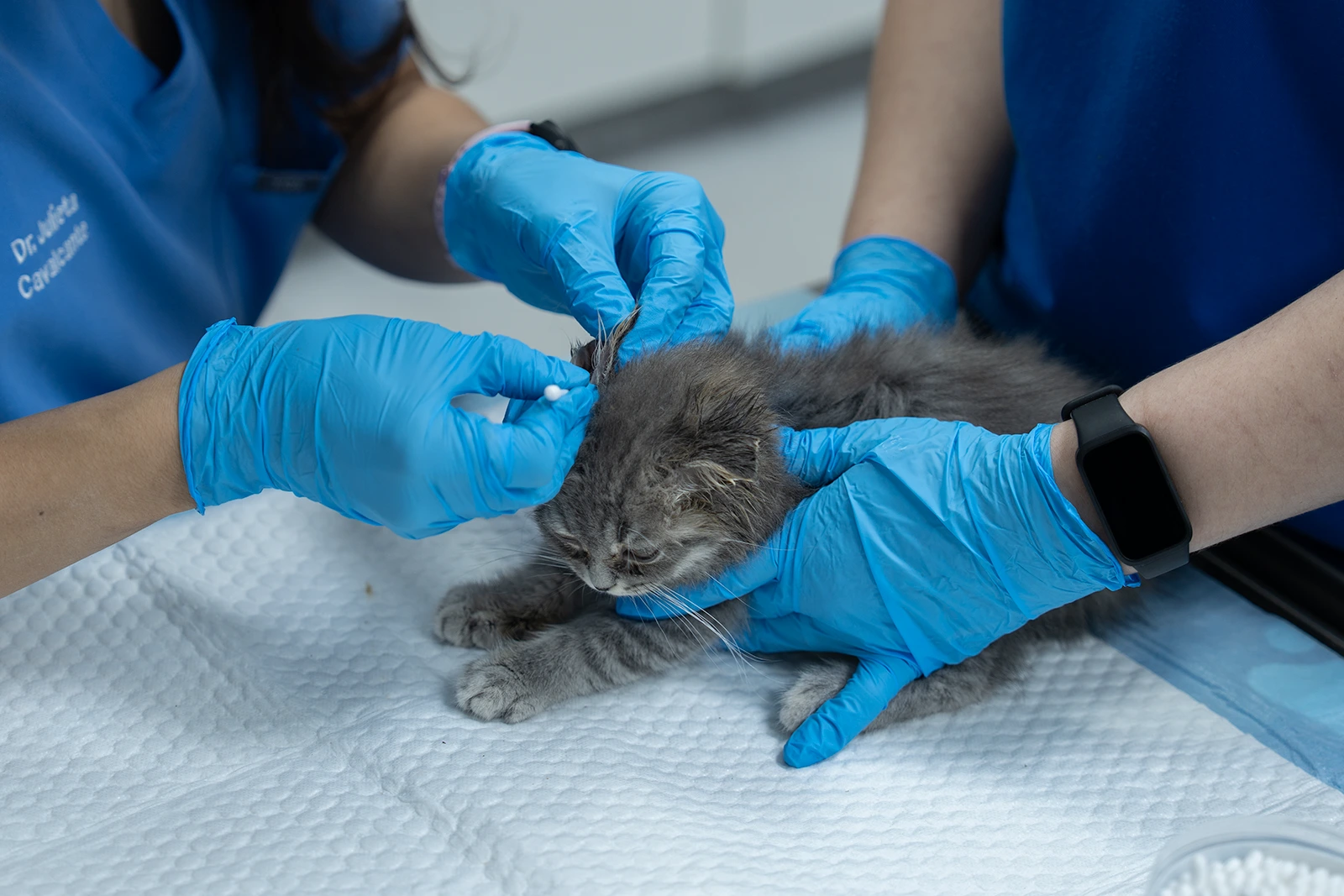
Ear Care & Ear Infections in Doha, Qatar
Parkview Pet Center in Madinat Khalifa North, Doha, Qatar diagnoses and treats ear conditions in dogs and cats — including bacterial and yeast ear infections, ear mites, chronic otitis, and ear canal foreign bodies. Qatar’s year-round heat and humidity create conditions for ear infections — particularly floppy-eared breeds such as Cocker Spaniels, Labradors, and Golden Retrievers. Ear mites are common in Qatar, especially rescue and stray kittens — dark coffee-ground discharge and head shaking are the signs. The clinic’s in-house laboratory performs cytology with same-visit results, identifying bacteria, yeast, or mites under the microscope during the consultation so targeted treatment begins immediately. Recurring ear infections often link to underlying allergies — the team investigates food and environmental allergies as a root cause. Since 2011: ear cleaning, topical and oral medications, and surgical options. Care at Parkview Pet Center is delivered by the Parkview veterinary team — generalists with deep clinical experience across surgery, internal medicine, dermatology, oncology, and emergency care.
Ear Infections in Dogs
Bacterial Ear Infections
Bacterial otitis externa is the most common ear condition in dogs in Doha. Bacteria such as Staphylococcus and Pseudomonas thrive in the warm, moist ear canal — especially during Qatar’s humid summer months. Signs include yellow or green discharge, redness, swelling, and a strong odour. Parkview Pet Center’s in-house ear cytology identifies the bacteria type during the consultation, enabling targeted antibiotic selection rather than broad-spectrum guesswork.
Yeast Ear Infections
Malassezia yeast infections produce a distinctive brown, waxy discharge with a musty smell. Yeast overgrowth is common in dogs with allergies, floppy ears, or those that swim frequently in Doha. The ear canal becomes red, itchy, and thickened over time if left untreated. Ear cytology at Parkview Pet Center confirms yeast presence under the microscope during the same visit, and treatment includes antifungal ear drops and addressing the underlying cause.
Chronic & Recurring Ear Infections
Dogs that develop ear infections more than two or three times a year almost always have an underlying cause — most commonly allergies. Food allergies and environmental allergies (atopic dermatitis) cause chronic ear canal inflammation that allows bacteria and yeast to repeatedly overgrow. The veterinary team at Parkview Pet Center investigates the root cause through dietary elimination trials and allergy assessment rather than simply treating each infection as it occurs. See dermatology services.
Foreign Bodies & Aural Haematomas
Grass seeds, sand, and debris can enter the ear canal during outdoor walks in Qatar, causing acute pain, head shaking, and pawing at the ear. Vigorous head shaking from any ear condition can rupture blood vessels in the ear flap, creating an aural haematoma — a swollen, fluid-filled ear that requires surgical drainage and repair. Foreign bodies are removed under sedation with an otoscope, and haematomas are surgically corrected to prevent permanent ear deformity. See surgery services.
Breed predisposition in Qatar: Floppy-eared breeds are significantly more prone to ear infections because their ear flaps trap heat, moisture, and reduce airflow to the ear canal. Cocker Spaniels, Labradors, Golden Retrievers, Basset Hounds, and Beagles — all popular breeds in Doha’s expat community — require regular ear monitoring. In Qatar’s climate, even breeds with upright ears can develop infections after swimming or during high-humidity months. Regular ear checks and prompt treatment at the first sign of discomfort prevent simple infections from becoming chronic, painful conditions.
Ear Conditions in Cats
Ear Mites
Ear mites (Otodectes cynotis) are the most common ear condition in cats in Qatar, particularly in rescue kittens and strays. These tiny parasites live in the ear canal, causing intense itching, dark coffee-ground discharge, and persistent head shaking. Left untreated, secondary bacterial infections develop. Diagnosis is confirmed by identifying mites or their eggs under the microscope during ear cytology at Parkview Pet Center. Treatment includes prescription anti-parasitic ear drops and, in severe cases, systemic anti-parasitic medication.
Multi-Cat Households
Ear mites are highly contagious between cats. In multi-cat households — common among Qatar’s rescue and foster community — all cats must be treated simultaneously, even those without symptoms. Bedding, sleeping areas, and shared surfaces should be thoroughly cleaned. Newly adopted kittens should receive a veterinary ear examination before being introduced to resident cats. See puppy & kitten care and laboratory services.
Bacterial & Yeast Infections in Cats
While ear mites are the most common cause of ear disease in cats, bacterial and yeast infections also occur — particularly in cats with compromised immune systems, diabetes, or those on long-term corticosteroids. Signs overlap with ear mites (discharge, head shaking, scratching), making cytology essential for accurate diagnosis. Parkview Pet Center’s in-house laboratory differentiates between mites, bacteria, and yeast during the same visit, ensuring the correct treatment is prescribed from the start.
Ear Polyps & Sun Damage
Inflammatory polyps are benign growths that can develop in the ear canal or middle ear of cats, causing chronic discharge, head tilt, and difficulty breathing if they extend into the nasopharynx. Surgical removal is the treatment of choice. White-eared cats in Qatar are also at risk of squamous cell carcinoma (skin cancer) on the ear tips from UV exposure. Any non-healing sore or crusty lesion on a cat’s ear tips should be examined promptly. See surgery services and oncology.
Signs to Watch For
- 1 Head shaking — persistent or violent shaking, especially after rest
- 2 Scratching at the ears or rubbing the head against furniture
- 3 Redness, swelling, or warmth in the ear canal or ear flap
- 4 Discharge — brown, yellow, green, or dark coffee-ground material
- 5 Strong or unusual odour from one or both ears
- 6 Pain when the ear is touched — pulling away, crying, or snapping
- 7 Holding the head tilted to one side
- 8 Hearing loss or reduced responsiveness to sounds
Head tilt and loss of balance can indicate middle or inner ear involvement — a more serious condition that may require imaging and intensive treatment. If your pet is disoriented, circling, falling to one side, or has rapid eye movement (nystagmus), seek veterinary care urgently. Call the emergency line at +974 5509 9494 if this occurs after hours.
Ear Diagnostics at Parkview
Otoscopic Examination
The veterinarian uses a handheld otoscope to visually examine the external ear canal and eardrum (tympanic membrane). This reveals redness, swelling, discharge type, foreign bodies, polyps, and whether the eardrum is intact. An intact eardrum is important for determining which ear medications are safe to use. The otoscopic examination is the first step in every ear consultation at Parkview Pet Center.
Ear Cytology
Ear cytology is the cornerstone of ear infection diagnosis. A swab of ear discharge is stained and examined under the microscope in Parkview Pet Center’s in-house laboratory. Cytology identifies bacteria (cocci vs. rods), yeast (Malassezia), white blood cells (indicating inflammation), and ear mites or their eggs. Results are available during the same visit, enabling targeted treatment from the first appointment. See laboratory services.
Culture & Sensitivity
For chronic or resistant ear infections — particularly those involving Pseudomonas bacteria — a culture and sensitivity test identifies the exact bacterial species and which antibiotics will be effective. This is especially important when initial treatment has failed or when rod-shaped bacteria are seen on cytology. Culture samples are sent to an external laboratory with results typically available within 5–7 days.
For pets with suspected middle or inner ear disease, digital X-ray evaluates the tympanic bullae (the bony chambers of the middle ear) for fluid, thickening, or bone changes. X-rays are processed in-house with same-visit results, allowing immediate treatment planning for complex ear cases.
Treatment
Professional Ear Cleaning
Thorough ear cleaning by the veterinary team removes accumulated discharge, debris, and biofilm from the ear canal before medication is applied. This is often performed under light sedation for comfort, especially when the ear is painful or the canal is severely impacted. Professional cleaning ensures that topical medications reach the ear canal lining directly, significantly improving treatment effectiveness.
Topical & Oral Medications
Ear drops containing antibiotics, antifungals, or anti-parasitic agents are prescribed based on cytology results. Some preparations combine multiple active ingredients to treat mixed infections. Oral antibiotics or antifungals are added for severe or deep infections. The veterinary team at Parkview Pet Center demonstrates proper ear drop technique during the consultation to ensure effective home treatment. Most uncomplicated ear infections resolve within 7–14 days with consistent medication.
Treating the Underlying Cause
Effective ear care goes beyond treating the current infection — identifying and managing the underlying cause is essential to prevent recurrence. The veterinary team investigates food allergies, environmental allergies (atopic dermatitis), hormonal conditions, and anatomical factors. Dietary elimination trials, allergy management, and long-term ear maintenance protocols are developed for dogs with chronic ear disease. See dermatology services.
Surgery for Chronic Cases
When medical management fails and the ear canal is permanently narrowed, calcified, or chronically infected, surgical options are considered. Total ear canal ablation (TECA) removes the entire diseased ear canal and is combined with bulla osteotomy to clear middle ear infection. Aural haematoma repair addresses blood-filled ear flaps caused by violent head shaking. Both procedures are performed in Parkview Pet Center’s dedicated surgical suite with full anaesthetic monitoring. See surgery services.
Prevention in Qatar’s Climate
Dogs: After Swimming & Bathing
Dry your dog’s ears thoroughly after swimming in pools, beaches, or bathing at home. Use a clean towel to gently absorb moisture from the ear flap and outer canal. For dogs prone to ear infections, apply a veterinary-approved ear drying solution after water exposure. Avoid inserting cotton buds into the ear canal. Dogs that swim regularly in Doha should have their ears checked and cleaned routinely — moisture trapped in the ear canal is one of the most common infection triggers in Qatar’s climate.
Cats: Parasite Prevention
Regular anti-parasitic treatment prevents ear mite infestations, particularly for cats that go outdoors, live in multi-cat households, or are recently adopted. Newly adopted kittens from shelters, rescues, or the street should receive a veterinary ear examination within the first week. Keeping cats on a monthly parasite prevention programme eliminates ear mites before they cause clinical disease. See parasite prevention and puppy & kitten care.
Regular Checks & Grooming
Routine ear checks during grooming appointments help detect early signs of infection before they become painful. Parkview Pet Center’s grooming team inspects the ears during every grooming session and alerts the veterinary team if abnormalities are found. At home, lift your pet’s ear flap weekly and check for redness, discharge, or unusual odour. Early detection is the simplest and most effective way to prevent serious ear disease. See grooming services.
Qatar-Specific Ear Health Risks
Qatar’s climate is a significant factor in ear disease prevalence. Year-round temperatures above 30°C combined with humidity levels that spike above 80% during summer create the ideal environment for bacterial and yeast overgrowth in the ear canal. Dogs that swim in pools — a common activity for families in Doha’s villa compounds — are at particular risk if their ears are not dried properly after water exposure. Air-conditioned indoor environments provide relief from the heat but can create temperature differentials that contribute to condensation in the ear canal when pets move between indoor and outdoor spaces.
Qatar’s large rescue and adoption community means many newly adopted cats arrive with ear mites. Shelters, foster homes, and multi-cat households are high-risk environments for ear mite transmission. Parkview Pet Center recommends an ear examination as part of every new pet adoption health check. For dogs, the combination of heat, humidity, and pool access makes Doha one of the higher-risk environments for canine ear infections in the Gulf region. Proactive ear care — regular checks, prompt treatment, and allergy management — prevents most serious ear disease.
Read the in-depth guide: Dog Ear Infection Treatment in Doha.
Ear problems are among the most common conditions we see in Doha — and one of the most responsive to early treatment. A simple ear check and cytology can prevent weeks of pain and repeated infections.
Related Services
Other services you may need
Frequently Asked Questions
Answers to the most common questions
1 How do I know if my dog has an ear infection?
Common signs of an ear infection in dogs include head shaking, scratching at the ears, redness or swelling of the ear canal, brown or yellow discharge, a strong odour from the ear, and pain when the ear is touched. Dogs with floppy ears are more prone to infections because their ear canals trap moisture and warmth. If you notice any of these signs, schedule an ear examination at Parkview Pet Center in Doha. Early treatment prevents the infection from spreading to the middle or inner ear. Call +974 4417 1560.
2 What causes ear infections in dogs in Qatar?
Qatar’s year-round heat and humidity are major contributing factors. Warm, moist ear canals create ideal conditions for bacteria and yeast to multiply. Swimming in pools without proper ear drying, frequent bathing without ear protection, and underlying allergies (food or environmental) are the most common triggers. Floppy-eared breeds such as Cocker Spaniels, Labradors, and Golden Retrievers are especially vulnerable. Parkview Pet Center’s veterinary team identifies the root cause of recurring infections rather than just treating symptoms.
3 How does the vet diagnose an ear infection?
The veterinarian examines the ear canal with an otoscope to assess redness, swelling, discharge, and the integrity of the eardrum. An ear cytology sample is then taken — a swab of ear discharge is stained and examined under the microscope in Parkview Pet Center’s in-house laboratory. Cytology identifies whether the infection is bacterial, yeast, or caused by mites, and guides targeted treatment. Results are available during the same visit — no waiting for external labs. For chronic or deep infections, X-ray or culture and sensitivity testing may be recommended.
4 What are ear mites in cats?
Ear mites (Otodectes cynotis) are tiny parasites that live in the ear canal and feed on skin debris and ear wax. They are extremely common in cats in Qatar, especially rescue kittens and stray cats. The hallmark signs are dark coffee-ground discharge, intense itching, head shaking, and scratching at the ears. Ear mites are highly contagious between cats and can spread to dogs in the same household. Diagnosis is confirmed by ear cytology at Parkview Pet Center, and treatment includes anti-parasitic ear drops and environmental decontamination for multi-pet households.
5 Can ear infections in dogs be caused by allergies?
Yes — allergies are the most common underlying cause of recurring ear infections in dogs. Both food allergies and environmental allergies (atopic dermatitis) cause inflammation in the ear canal, creating conditions that allow bacteria and yeast to overgrow. If your dog gets ear infections more than two or three times a year, the veterinary team at Parkview Pet Center will investigate allergies as a root cause. This may include a dietary elimination trial or allergy testing. Treating the underlying allergy is essential to breaking the cycle of recurring ear infections.
6 How much does ear infection treatment cost in Doha?
The cost of ear care at Parkview Pet Center depends on the condition and treatment required. A consultation with otoscopic examination and ear cytology is a standard starting point. Cases requiring culture and sensitivity testing, prolonged medication courses, or investigation of underlying allergies involve additional costs. Chronic ear disease requiring surgery (such as TECA or aural haematoma repair) is a more involved procedure. Your veterinarian discusses all diagnostics, treatments, and costs before proceeding. Call +974 4417 1560 for specific pricing.
7 Can I clean my dog’s ears at home?
Routine ear cleaning with a veterinary-approved ear cleaner is recommended for dogs prone to ear infections, especially after swimming or bathing. Use a cleaner recommended by your veterinarian — never use cotton buds inside the ear canal as they can push debris deeper and damage the eardrum. Gently squeeze the cleaner into the ear canal, massage the base of the ear for 20–30 seconds, and allow the dog to shake out the excess. Wipe the outer ear with a cotton ball. If the ear is red, swollen, painful, or producing discharge, do not attempt home cleaning — bring the pet to Parkview Pet Center for examination.
8 What is TECA surgery for chronic ear infections?
Total ear canal ablation (TECA) is a surgical procedure for dogs with severe, chronic, end-stage ear disease that no longer responds to medical treatment. The procedure removes the entire ear canal and is typically combined with a bulla osteotomy to remove infected tissue from the middle ear. TECA is a major surgery performed under general anaesthesia with full monitoring. It is reserved for cases where the ear canal is permanently narrowed, calcified, or chronically infected. Most dogs experience significant improvement in comfort and quality of life after surgery. Call +974 4417 1560 to discuss surgical options.
9 My cat keeps shaking its head — what should I do?
Persistent head shaking in cats usually indicates ear discomfort. The most common cause in Qatar is ear mites, particularly in rescue kittens and cats from multi-cat households. Other causes include bacterial or yeast ear infections, ear polyps, and foreign bodies. Do not attempt to treat at home — the veterinarian needs to examine the ear canal with an otoscope and perform cytology to identify the specific cause. Some conditions require prescription medication that is different from over-the-counter ear drops. Schedule an ear examination at Parkview Pet Center — call +974 4417 1560.
10 Are ear infections in pets contagious?
It depends on the cause. Ear mites are highly contagious between cats and can spread to dogs in the same household — all pets in the home should be treated simultaneously. Bacterial and yeast ear infections are not contagious between pets or to humans — they result from overgrowth of organisms already present in the ear canal. If your pet has ear mites, the veterinary team at Parkview Pet Center will advise on treating all animals in the household and decontaminating bedding and shared sleeping areas.
Visit Parkview Pet Center
Madinat Khalifa North, Doha, Qatar
Contact Information
Parkview Pet Center
Areas Served