
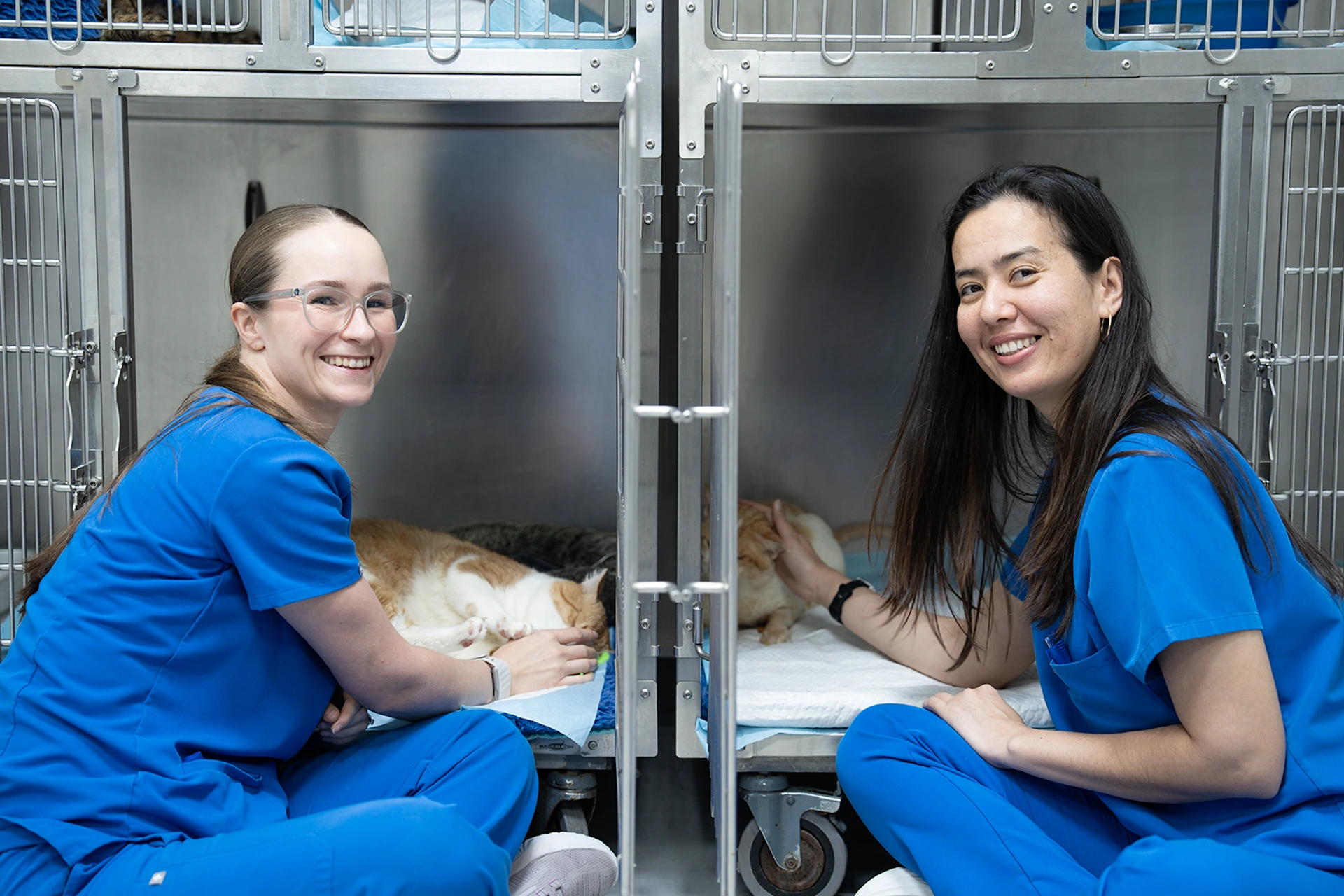
Veterinary ICU and Overnight Hospitalisation in Doha, Qatar
Parkview Pet Center in Madinat Khalifa North, Doha, Qatar is a veterinary clinic and full-service hospital, operating a hospital ward with ICU monitoring for dogs and cats requiring continuous medical attention. The ward is staffed 24 hours by trained veterinary nurses and pet care staff, with on-call veterinarian escalation for any clinical change. ICU-level monitoring includes IV pumps day and through the night, continuous pulse oximetry, ECG, oxygen supplementation, and blood transfusion capability — supported by the in-house laboratory for same-visit blood work. Cases admitted include post-surgical recovery, severe dehydration in Qatar's summer heat, toxin ingestion, urinary blockage, tick-borne anaemia (Ehrlichia, Babesia — endemic in Qatar) requiring transfusion, pancreatitis, and diabetic ketoacidosis. Hospitalisation is by veterinary approval — admission is determined based on clinical need. Admissions occur during clinic hours and via the after-hours on-call service. The hospital ward is medically distinct from pet boarding (healthy animals) and from the three disease-specific isolation wards (contagious cases). Operating since 2011. Care at Parkview Pet Center is delivered by the Parkview veterinary team — generalists with deep clinical experience across surgery, internal medicine, dermatology, oncology, and emergency care.
What Hospitalisation Means
Medical inpatient care — not boarding, not isolation
Veterinary hospitalisation at Parkview Pet Center is medical inpatient care for pets that need continuous monitoring, treatment, or recovery support that cannot be managed at home. A dog recovering from emergency surgery, a cat on IV fluids for severe dehydration, a puppy being treated for toxin ingestion — these patients need a hospital ward with monitoring equipment, veterinary nursing staff, and access to the full in-house laboratory and diagnostic imaging suite.
Hospitalisation is distinct from two other inpatient services at the clinic. Pet boarding is for healthy animals while their owners travel — boarding guests are in separate facilities with no medical equipment or veterinary monitoring beyond routine checks. Isolation wards are for contagious cases (parvovirus, panleukopenia, ringworm) that must be separated from other patients to prevent cross-contamination. Hospitalised patients in the main ward are non-contagious medical and surgical cases receiving active treatment and monitoring. If a boarding pet becomes ill, they are transferred from boarding to the hospital ward for veterinary care.
Hospital Ward Equipment
Medical monitoring and treatment capability
IV Fluid Therapy & Pumps
Continuous intravenous fluid therapy for dehydration, kidney support, toxin flushing, and medication delivery. Calibrated IV pumps ensure precise fluid rates — critical for small patients and those with heart or kidney conditions where fluid overload is a risk. Multiple patients can receive simultaneous IV therapy.
Patient Monitoring
Pulse oximeters measure blood oxygen levels continuously. ECG monitoring tracks heart rhythm and rate. Temperature monitoring detects fever or hypothermia. These instruments provide real-time data that alerts the nursing team to changes in a patient’s condition before clinical signs become apparent.
Oxygen Supplementation
Supplemental oxygen delivery for patients with respiratory distress, pneumonia, post-anaesthetic recovery, or heart failure. Available for both dogs and cats during hospitalisation.
Blood Transfusion Capability
For patients with severe blood loss (trauma, surgery complications), life-threatening anaemia (tick-borne disease, immune-mediated conditions), or clotting disorders. The in-house laboratory monitors blood values before, during, and after transfusion with same-visit results. See laboratory services.
Common Reasons for Hospitalisation
When your pet needs inpatient veterinary care
Post-Surgical Recovery
Complex surgeries, emergency procedures, and cases involving older or higher-risk patients may require overnight monitoring after the procedure. The nursing team monitors vital signs, manages pain medication, checks surgical sites, and ensures the patient recovers safely before discharge. Routine surgeries (spay, neuter, simple mass removals) are typically day procedures — the veterinarian advises when overnight monitoring is needed. See surgery services.
Severe Dehydration & IV Fluid Therapy
Qatar’s extreme heat increases dehydration risk in pets, especially during summer. Pets with vomiting, diarrhoea, kidney disease flare-ups, or heat stress may need aggressive IV rehydration that cannot be managed at home. Hospitalisation allows continuous fluid therapy with regular blood chemistry monitoring to track kidney values and electrolytes. See laboratory services.
Toxin & Poison Ingestion
Dogs that have ingested chocolate, xylitol, rodent poison, medications, or toxic plants require immediate treatment and monitoring. Depending on the toxin, treatment includes induced vomiting, activated charcoal, IV fluids, and liver/kidney monitoring over 24–72 hours. Cats are particularly sensitive to certain toxins including lilies and essential oils. See emergency services.
Urinary Blockage
Male cats with urinary blockage require catheterisation, IV fluid therapy, and hospitalisation for monitoring — typically 24–72 hours. Blood chemistry tracks kidney values and electrolyte balance, which can become life-threatening if the blockage caused toxin buildup. See urinary care.
Transfusion & Severe Anaemia
Tick-borne diseases (Ehrlichia, Babesia — endemic in Qatar) can cause severe destruction of red blood cells, requiring blood transfusion and intensive monitoring. Immune-mediated haemolytic anaemia, trauma with significant blood loss, and clotting disorders also require transfusion and inpatient care. The in-house laboratory monitors packed cell volume and blood chemistry throughout the hospitalisation. See parasite prevention.
Additional conditions requiring hospitalisation include pancreatitis (severe vomiting, abdominal pain, dehydration), diabetic crisis (ketoacidosis), severe infections requiring injectable antibiotics and monitoring, and trauma recovery. The veterinary team determines whether hospitalisation is needed based on the severity of the case, the treatment required, and whether safe monitoring can be achieved at home. See internal medicine and senior pet care.
Monitoring & Staffing
How hospitalised patients are cared for around the clock
What happens while your pet is hospitalised
- 1
The veterinarian assesses the case, develops a treatment plan, and approves hospitalisation.
- 2
The patient is settled into the hospital ward with IV access, monitoring equipment, and appropriate bedding.
- 3
Nurses and nursing assistants are assigned based on the severity of each case — critical patients receive more intensive attention.
- 4
Vital signs (temperature, heart rate, respiratory rate, blood pressure, oxygen levels) are monitored at regular intervals.
- 5
Medications, IV fluids, and pain management are administered on schedule.
- 6
In-house blood work and diagnostic imaging are available for ongoing monitoring — results during the same visit guide treatment adjustments.
- 7
If a patient’s condition worsens during the night, the on-call veterinarian is called to the clinic immediately to attend.
- 8
The veterinary team reviews the patient’s progress and adjusts the treatment plan as the case evolves.
Staying Informed About Your Pet
Communication during hospitalisation
Owners are welcome to contact reception to request updates on their hospitalised pet. The veterinary team provides updates via WhatsApp and phone when the team has availability between managing cases. The clinic understands that having a pet in hospital is stressful, and the team makes every effort to keep owners informed about their pet’s progress, treatment, and expected timeline.
If there are critical changes in your pet’s condition — a significant deterioration, an unexpected complication, or a situation requiring the owner’s consent for a treatment decision — the veterinary team contacts the owner immediately, regardless of time. Routine updates are provided as the team’s schedule allows; urgent communication is always prioritized. Owners who wish to visit their hospitalised pet can contact reception to arrange a time.
The Admission Process
How hospitalisation is arranged
From assessment to admission
- 1
The veterinarian examines the patient and determines that hospitalisation is clinically necessary.
- 2
The treatment plan, expected duration, and estimated costs are discussed with the owner before admission.
- 3
The owner provides consent and emergency contact details.
- 4
The patient is admitted to the hospital ward and treatment begins.
- 5
Diagnostic tests (blood work, imaging) are run as needed — in-house with same-visit results.
- 6
The veterinary team provides updates during the hospitalisation period.
- 7
Discharge occurs when the veterinarian confirms the patient is stable enough for home care — with written discharge instructions, medication, and a follow-up schedule.
Hospitalisation is by veterinary approval only — it is not available on demand. A veterinarian must assess the case and confirm that inpatient care is the appropriate level of treatment. For pets that need post-discharge follow-up at home, Parkview Pet Center offers nurse home visits for wound care, medication administration, and ongoing monitoring. See house calls & home visits.
Qatar-Specific Hospitalisation Needs
Why inpatient care is important in Doha’s climate
Qatar’s extreme heat — exceeding 45°C during summer months — creates conditions that frequently lead to hospitalisation. Heatstroke in dogs that exercised outdoors during peak temperatures, severe dehydration in pets with kidney disease whose water intake couldn’t keep pace with fluid loss, and heat-related exacerbation of heart conditions are all hospitalisation cases that the veterinary team manages regularly. Dehydration in Qatar can escalate rapidly — a pet that seemed mildly unwell in the morning can require emergency IV fluids by the afternoon.
Tick-borne diseases are endemic in Qatar, and severe cases of Ehrlichia and Babesia can cause life-threatening anaemia requiring blood transfusion and multi-day hospitalisation. Parvovirus remains present in the stray dog population — unvaccinated puppies that contract parvo require intensive inpatient care in the clinic’s isolation wards (separate from the main hospital). Qatar’s expat community includes pet owners from countries where overnight veterinary hospitalisation with continuous monitoring is standard — Parkview Pet Center provides this level of inpatient care in Doha.
Emergency On-Call
Call now — our on-call vet will advise you immediately and meet you at the clinic.
Related Services
Other services you may need
Frequently Asked Questions
Answers to the most common questions
1 Can my pet stay overnight at the vet in Doha?
Yes. Parkview Pet Center provides overnight veterinary hospitalisation for dogs and cats that need continuous monitoring, IV fluid therapy, pain management, or post-surgical observation. Nurses monitor hospitalised patients around the clock, and if a patient’s condition worsens overnight, the on-call veterinarian is called to the clinic immediately. Hospitalisation is by veterinary approval — the veterinarian assesses the case and approves admission based on clinical need. Call +974 4417 1560 to discuss your pet’s situation.
2 Is pet hospitalisation the same as boarding?
No. Hospitalisation is medical inpatient care — patients receive IV fluids, medications, monitoring, and veterinary nursing attention in a hospital ward equipped with IV pumps, pulse oximeters, ECG, and oxygen. Boarding is for healthy pets while their owners travel — boarding guests are in completely separate facilities with no medical monitoring equipment. If a boarding pet becomes ill during their stay, they are transferred from boarding to the hospital ward for veterinary care.
3 How will I know how my pet is doing in hospital?
Owners can contact reception to request updates on their hospitalised pet. The veterinary team provides updates via WhatsApp and phone when the team has availability between managing cases. If there are critical changes — a significant deterioration, complication, or a decision requiring the owner’s consent — the veterinary team contacts the owner immediately, regardless of time. Routine progress updates are provided as the team’s schedule allows. Owners who wish to visit their hospitalised pet can contact reception to arrange a time. Call +974 4417 1560.
4 Does the vet monitor my pet overnight?
Yes. Nurses and nursing assistants monitor hospitalised patients around the clock — checking vital signs, administering medications and IV fluids on schedule, and observing clinical status. Critical patients receive more intensive monitoring. If a patient’s condition worsens during the night, the on-call veterinarian is called to the clinic immediately to assess the patient and adjust the treatment plan. The in-house laboratory is available for emergency blood work at any time.
5 Can the vet do blood transfusions for pets in Qatar?
Yes. Parkview Pet Center in Doha has blood transfusion capability for dogs and cats. Transfusions are performed for severe blood loss (trauma, surgical complications), life-threatening anaemia caused by tick-borne diseases (Ehrlichia, Babesia — endemic in Qatar), immune-mediated conditions, and clotting disorders. The in-house laboratory monitors blood values before, during, and after transfusion with same-visit results. Call +974 4417 1560 if your pet needs urgent assessment.
6 Does my pet need to be hospitalised after surgery?
It depends on the procedure and your pet’s condition. Routine surgeries — spaying, neutering, simple mass removals — are typically day procedures where the pet goes home the same day. Complex surgeries, emergency procedures, and cases involving older or higher-risk patients may require overnight monitoring. The veterinarian discusses whether hospitalisation is needed before the procedure and advises based on how the surgery and anaesthetic recovery progress.
7 What equipment does the pet hospital have in Doha?
Parkview Pet Center’s hospital ward is equipped with IV pumps for precise fluid delivery, pulse oximeters for continuous blood oxygen monitoring, ECG for heart rhythm tracking, temperature monitoring, oxygen supplementation for respiratory support, and blood transfusion capability. The full in-house laboratory — complete blood count, blood chemistry, urinalysis, rapid infectious disease tests — is available for ongoing monitoring during hospitalisation with same-visit results. Digital X-ray and ultrasound are also available in-house.
8 Can I visit my pet in hospital?
Owners who wish to visit their hospitalised pet can contact reception at +974 4417 1560 to arrange a suitable time. The veterinary team accommodates visits when it is safe and appropriate for the patient and does not disrupt treatment schedules or disturb other hospitalised animals. In some cases, visits may provide comfort to the patient — the veterinary team advises based on the individual case.
9 How much does pet hospitalisation cost in Doha?
The cost of hospitalisation at Parkview Pet Center depends on the diagnosis, treatment required, duration of stay, medications, IV fluid therapy, and any diagnostic tests performed during the hospitalisation. The veterinarian discusses expected costs and treatment plan with the owner before admission — there are no surprise charges. Costs are reviewed if the treatment plan changes during the stay. Call +974 4417 1560 for specific pricing based on your pet’s situation.
Visit Parkview Pet Center
Madinat Khalifa North, Doha, Qatar
Contact Information
Parkview Pet Center
Areas Served