
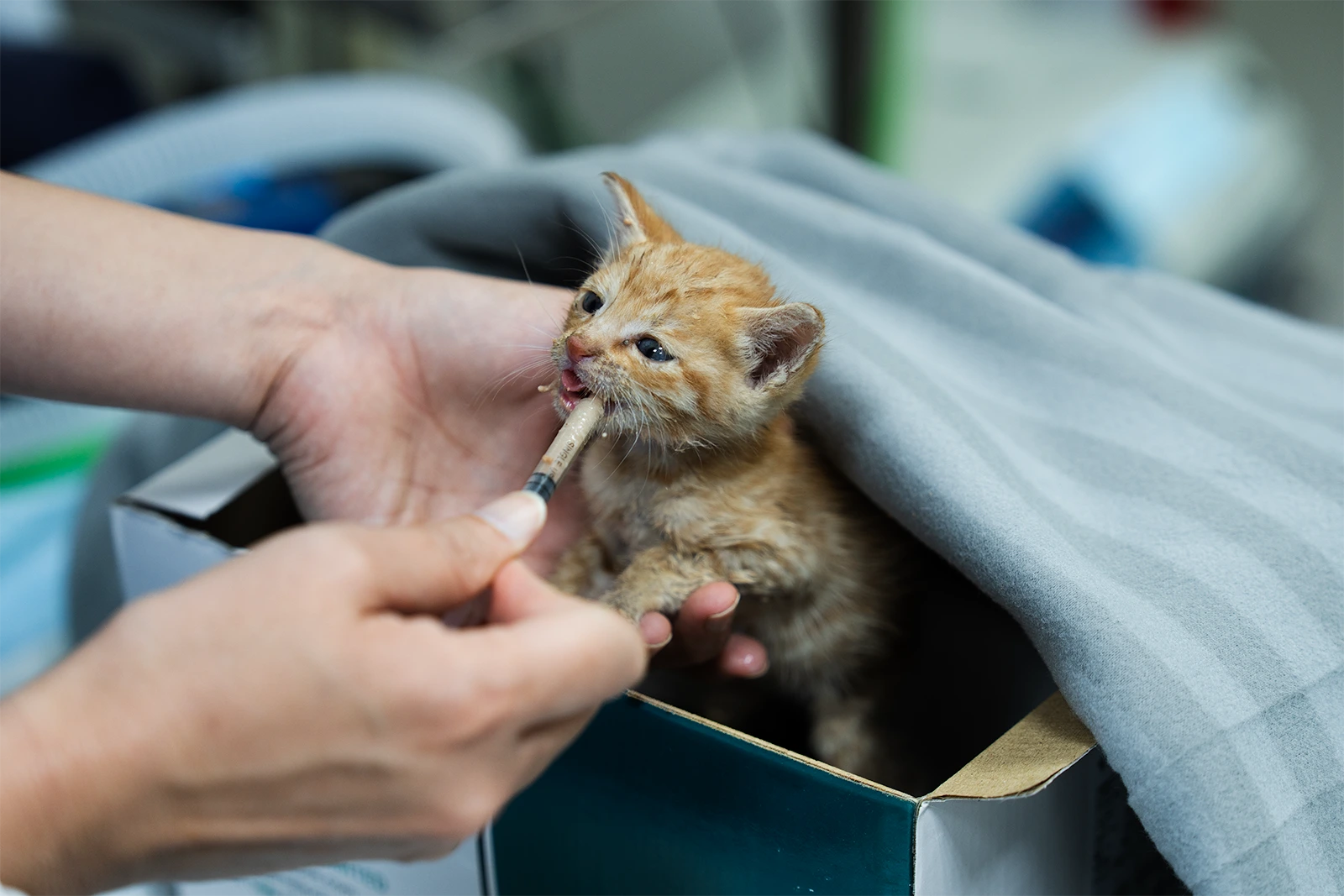
Puppy & Kitten Care in Doha, Qatar
Parkview Pet Center in Madinat Khalifa North, Doha, Qatar provides comprehensive first-year veterinary care for puppies and kittens — from the first vet visit through vaccinations, deworming, microchipping, nutrition planning, and spay or neuter scheduling. Operating since 2011, the clinic administers the full DHPP series for puppies and FVRCP series for kittens following Qatar’s Ministry of Municipality requirements for rabies vaccination and microchip registration. The in-house laboratory performs rapid FIV/FeLV screening for rescue kittens and parvovirus testing for sick puppies with same-visit results. Rescue and street-background animals receive a full intake assessment. The on-site pet store stocks age-specific puppy and kitten diets. The veterinary team builds a structured first-year care plan covering vaccinations, parasite prevention, nutrition, behavioural development, and spaying/neutering. Care at Parkview Pet Center is delivered by the Parkview veterinary team — generalists with deep clinical experience across surgery, internal medicine, dermatology, oncology, and emergency care.
The First Vet Visit
Within 48 hours of bringing your new pet home
The first veterinary visit sets the foundation for your puppy or kitten’s lifetime health. At Parkview Pet Center in Doha, the veterinary team recommends bringing your new pet within 48 hours of arriving home — whether purchased from a breeder, adopted from a rescue, or found on the street. The first visit includes a full nose-to-tail physical examination checking eyes, ears, teeth, heart, lungs, abdomen, skin, and coat. The veterinary team assesses body condition, checks for congenital abnormalities, and examines for parasites including fleas, ticks, and ear mites.
For puppies and kittens with no known veterinary history — common with rescues and street animals in Qatar — the team assumes no prior vaccination and builds a complete vaccination and deworming schedule from scratch. For pets arriving with vaccination records or import documents, the team reviews the paperwork and continues the schedule where it left off. The first visit also covers nutrition recommendations, house-training advice, socialisation guidance, and a timeline for upcoming appointments including microchipping, spaying or neutering, and booster vaccinations.
Puppy Vaccination Schedule in Qatar
Core vaccination milestones
- 1 6–8 weeks — First DHPP vaccination (distemper, hepatitis, parainfluenza, parvovirus) and initial deworming
- 2 10–12 weeks — Second DHPP booster and Bordetella (kennel cough) vaccine if needed for boarding or socialising
- 3 14–16 weeks — Third DHPP booster and rabies vaccination (required for Qatar pet registration)
- 4 6 months — Spay or neuter discussion, booster review, and transition planning
- 5 12–16 months — First annual booster (DHPP + rabies) and adult wellness screening
Parvovirus is a serious risk for unvaccinated puppies in Qatar — completing the full DHPP series on schedule is critical. See vaccination services for full details on core and non-core vaccines.
Kitten Vaccination Schedule in Qatar
Core vaccination milestones
- 1 6–8 weeks — First FVRCP vaccination (feline viral rhinotracheitis, calicivirus, panleukopenia) and initial deworming
- 2 10–12 weeks — Second FVRCP booster and FeLV vaccine (recommended for outdoor or multi-cat households)
- 3 14–16 weeks — Third FVRCP booster and rabies vaccination (required for Qatar pet registration)
- 4 4–6 months — Spay or neuter scheduling (kittens can reach sexual maturity as early as 4 months)
- 5 12 months — First annual booster (FVRCP + rabies), transition to adult food and adult wellness screening
FIV/FeLV testing is strongly recommended for all rescue kittens before introduction to household cats. See vaccination services | laboratory | isolation care.
Deworming, Microchipping & Registration
Deworming
Intestinal parasites are common in puppies and kittens in Qatar — particularly rescue animals. Deworming starts at the first veterinary visit and follows a schedule aligned with vaccination appointments. Puppies and kittens are dewormed every 2–4 weeks until 12 weeks of age, then monthly until 6 months, then every 3 months for life. Fecal testing confirms parasite clearance. Deworming services
Microchipping
Qatar’s Ministry of Municipality requires ISO-compliant microchipping for pet registration. Microchipping is also mandatory for international pet travel from Qatar. The procedure takes seconds and can be done at any vaccination visit. Parkview Pet Center recommends microchipping at the first or second appointment. Microchipping services
Qatar Pet Registration
Pet registration with Qatar’s Ministry of Municipality requires a valid rabies vaccination certificate and an ISO microchip. Parkview Pet Center provides the vaccination records and microchip number needed for registration. The veterinary team can advise on the registration process and documentation requirements during your puppy or kitten’s vaccination visits.
Nutrition for Puppies & Kittens
Puppy Nutrition
Puppy food is formulated with higher calories, protein, and calcium-to-phosphorus ratios to support growth. Small-breed puppies transition to adult food around 12 months; large and giant breeds stay on puppy food until 18 months to support skeletal development. Parkview Pet Center’s on-site pet store stocks Royal Canin and Hills Pet Nutrition puppy diets. Nutrition services | Pet store
Kitten Nutrition
Kitten food provides the high protein and calorie density needed for rapid growth during the first 12 months. Kittens should not eat adult cat food — it lacks the nutrient concentration required for development. Wet food helps maintain hydration, which is particularly important in Qatar’s hot climate. The veterinary team recommends a specific diet during the first visit. Nutrition services | Pet store
Spaying, Neutering & Behavioural Development
Spaying & Neutering
Most puppies and kittens are spayed or neutered around 6 months of age. Large and giant breed dogs may benefit from waiting until 12–18 months. Kittens can reach sexual maturity as early as 4 months — early scheduling prevents unwanted litters and spraying behaviour. Pre-surgical blood work is performed in the in-house laboratory on the same day. The veterinary team discusses the right timing during vaccination visits. Spaying & neutering
Socialisation & Behaviour
The critical socialisation window for puppies is 3–14 weeks of age. Exposure to different people, environments, sounds, and handling during this period shapes lifelong behaviour. Kittens have a similar window between 2–7 weeks. The veterinary team can advise on safe socialisation strategies that balance disease risk (before vaccination is complete) with behavioural development. Behavioural consultations
Rescue & Adoption Checklist
Rescue puppies and kittens in Qatar often arrive with no vaccination history, active parasite burdens, and potential infectious diseases. Parkview Pet Center provides a structured intake protocol for rescue and adopted animals — the veterinary team assumes no prior veterinary care and builds a complete health plan from the first visit.
For rescue puppies:
- Full physical examination and body condition assessment
- Fecal testing for intestinal parasites (roundworm, hookworm, whipworm, Giardia)
- Rapid parvovirus snap test if showing gastrointestinal signs
- Full DHPP vaccination series started from scratch
- Deworming protocol initiated
- Microchipping and Qatar registration planning
For rescue kittens:
- Full physical examination with attention to upper respiratory signs
- FIV/FeLV rapid snap testing before introduction to household cats
- Ear mite check and treatment if needed
- Fecal testing for intestinal parasites
- Full FVRCP vaccination series started from scratch
- Deworming protocol initiated
- Microchipping and Qatar registration planning
See laboratory | isolation care | deworming
Common Health Issues in Qatar
Parvovirus in Puppies
Parvovirus is a serious and often fatal disease in unvaccinated puppies in Qatar. The virus is highly contagious and survives in the environment for months. Symptoms include severe vomiting, bloody diarrhoea, and rapid dehydration. Parkview Pet Center performs rapid parvovirus testing in the in-house laboratory and treats confirmed cases in a dedicated isolation ward. The full DHPP vaccination series is the most effective prevention. Isolation care | Laboratory
Upper Respiratory Infections in Kittens
Upper respiratory infections (URI) are extremely common in rescue kittens and shelter cats in Qatar. Symptoms include sneezing, nasal discharge, eye discharge, and reduced appetite. Most URIs are caused by feline herpesvirus or calicivirus — both covered by the FVRCP vaccine. Treatment includes supportive care, antibiotics for secondary bacterial infections, and nutritional support. Kittens with severe URI may need hospitalisation for fluid therapy and feeding assistance. Isolation care
Every puppy and kitten deserves a strong start. A structured first-year care plan — vaccinations, deworming, nutrition, and timely spaying or neutering — sets your pet up for a healthy life in Qatar.
Related Services
Other services you may need
Frequently Asked Questions
Answers to the most common questions
1 When should I take my new puppy to the vet in Qatar?
Take your new puppy to the vet within the first 48 hours of bringing them home. At Parkview Pet Center in Doha, the first visit includes a full physical examination, a parasite check, and a vaccination and deworming plan. If you’ve adopted a puppy from a rescue or the street, the veterinary team assumes no prior vaccination and starts the full DHPP series. Bring any paperwork you have — vaccination records, adoption papers, or import documents. Call +974 4417 1560 to book a first visit.
2 When should I take my new kitten to the vet in Doha?
Bring your new kitten to Parkview Pet Center within 48 hours. The first visit includes a full physical examination with special attention to upper respiratory signs (common in rescue kittens in Qatar), an ear mite check, and a vaccination and deworming plan. For rescue or adopted kittens, FIV/FeLV rapid snap testing is recommended before introducing the kitten to other cats in your household — results are available in minutes from the in-house laboratory. Call +974 4417 1560.
3 What vaccinations does my puppy need in Qatar?
Puppies in Qatar need the DHPP series (distemper, hepatitis, parainfluenza, parvovirus) starting at 6–8 weeks with boosters every 3–4 weeks until 16 weeks. Rabies vaccination is required at 12–16 weeks — Qatar’s Ministry of Municipality mandates rabies for pet registration. Kennel cough (Bordetella) vaccine is recommended if the puppy will be boarding, attending dog parks, or socialising with other dogs. Parkview Pet Center administers the full puppy vaccination series and maintains vaccination records for Qatar registration and international travel.
4 What vaccinations does my kitten need in Qatar?
Kittens need the FVRCP series (feline viral rhinotracheitis, calicivirus, panleukopenia) starting at 6–8 weeks with boosters every 3–4 weeks until 16 weeks. Rabies vaccination is required at 12–16 weeks for Qatar pet registration. FeLV (feline leukaemia virus) vaccine is recommended for kittens that will go outdoors or live with other cats. Parkview Pet Center in Doha administers the full kitten vaccination series.
5 Does my rescue cat need FIV and FeLV testing?
Yes. FIV (feline immunodeficiency virus) and FeLV (feline leukaemia virus) testing is strongly recommended for all rescue cats, strays, and newly adopted kittens in Qatar — especially before introducing them to a household with other cats. Both viruses are common in Qatar’s stray cat population. Parkview Pet Center performs rapid FIV/FeLV combo testing in the in-house laboratory with results in minutes. If the kitten tests positive, the veterinary team discusses management options and isolation protocols. See laboratory services.
6 When should I microchip my puppy or kitten in Qatar?
An ISO-compliant microchip can be implanted during any veterinary visit — Parkview Pet Center recommends microchipping at the first or second vaccination appointment. Qatar’s Ministry of Municipality requires microchipping for pet registration, and it is mandatory for international travel from Qatar. The procedure takes seconds and is comparable to a routine vaccination in discomfort. See microchipping services.
7 What should I feed my new puppy or kitten?
Puppies and kittens need age-specific food — not adult pet food. Puppy food is formulated for growth with higher calories and specific nutrient ratios. Small-breed puppies transition to adult food around 12 months; large breeds stay on puppy food until 18 months. Kitten food provides the high protein and calories needed for rapid growth, with transition to adult food at 12 months. Parkview Pet Center’s on-site pet store stocks Royal Canin and Hills Pet Nutrition puppy and kitten diets. Your veterinarian can recommend the right diet during the first visit. See nutrition services | pet store.
8 When should I spay or neuter my puppy or kitten?
Most puppies and kittens are spayed or neutered around 6 months of age. Large and giant breed dogs may benefit from waiting until 12–18 months to allow skeletal development. Kittens can reach sexual maturity as early as 4 months — early scheduling prevents unwanted pregnancies and spraying. The veterinary team at Parkview Pet Center discusses the right timing during your pet’s vaccination visits. Pre-surgical blood work is performed in the in-house laboratory. See spaying & neutering.
9 How much does a puppy or kitten first visit cost in Doha?
The cost of a first puppy or kitten visit at Parkview Pet Center depends on the services needed — a basic consultation and examination costs less than a visit that includes vaccinations, deworming, microchipping, and FIV/FeLV testing. The veterinary team discusses all services and costs before proceeding. Call +974 4417 1560 for specific pricing.
10 Is parvovirus common in Qatar?
Yes. Parvovirus is a serious risk for unvaccinated puppies in Qatar, particularly rescue puppies and those from street backgrounds. The virus is highly contagious and survives in the environment for months. Symptoms include severe vomiting, bloody diarrhoea, and lethargy — seek veterinary care immediately if you notice these signs. Parkview Pet Center performs rapid parvovirus testing in the in-house laboratory and treats confirmed cases in a dedicated isolation ward. Completing the full DHPP vaccination series is the most effective prevention. See isolation care | laboratory.
Visit Parkview Pet Center
Madinat Khalifa North, Doha, Qatar
Contact Information
Parkview Pet Center
Areas Served